NYC Flamenco Festival 2026, Part 2
March 4th - FIESTA FLAMENCA - Baryshnikov Arts Center
For my preferences, this was the best show of the entire festival, at least out of the 9 shows I was able to catch. Unfortunately, La Repompa had to cancel her appearances at the Festival due to a family emergency. I’m sending good vibes to her family, whom I was privileged to know, study and once work with, while they lived here in NYC.
The artists who created this magical night were Manuel Liñán (dancer and director), cantaora Mara Rey , dancers Alberto Sellés, Juan Tomás de la Molía, guitarist José Fermín Fernández and cantaor Juan de la María. The format of flamenco shows in proscenium, i.e. on a (usually) raised stage, with an audience separated by a proscenium, distance and an occasional orchestra pit, does not lend itself to an immersive experience. Coming from the perspective of a person who at least plays palmas as a protagonist of the fiesta, I will always prefer a setting where I can be as close as possible to the performers. This show created a surrounding envelope of art. After an informal opening bulerías at a wine-laden table in the middle of the space, the artists continually re-centered their action, bringing their numbers right up close to various parts of the room, and thus, to different sections of the audience. At a larger space this wouldn’t be possible, but in the Jerome Robbins Theater (Baryshnikov Arts Center), the event was held in a high-ceilinged room that worked perfectly.
Having seen Sr. de la Molía at the Gala, he was no surprise; he has what the kids call ‘mad skills’. We were treated to seeing his incredible taconeo up close, the virtual sparks flying from his feet, as he prowled the entire space, dancing for a while between two chairs very close to our seats. Later, from our left side, Mara Rey began her soulful and fierce bolero; her fire contagiously close, her flowers gradually leaving her hair as it undid itself, as if by magic, in compás. We were enthralled by her nostalgic, throaty song and her defiant patadas. I felt I was at Torres Macarena, one of the oldest and most authentic peñas (flamenco social clubs) in Sevilla. What was a surprise was Alberto Sellés as a cantaor! He fully sang for his own dance which took place on various levels - first on a bench, and then on a table by the windows, so the public had a good view of what he was doing; dancing and singing Esperanza Fernández’ Tangos del Titi, interspersing those swingy verses between his tasty footwork bits. Guitarist Fernández, Juan de la María and Liñán followed to support him in that situation, while the other artists took shadowed seats to the side, resting and awaiting their featured moments. Juan Fernández, the guitarist, stayed close to this area and played his wonderfully complex and fast solo, with nimble fingers that seemed to defy time and space. The artists we witness nowadays have a level of mastery almost unheard of in past times; the practice, artistry and discipline they must have to achieve these heights of expertise seems to be on a whole other plane of reality. OLÉ!
Finally, back at centerstage and accompanied by the powerhouse cantaor Juan de la Maria, Sr. Liñán closed out the Fiesta Flamenca series of solos with his signature Alegrías in the bata de cola and wielding his manton. Despite his masterful direction of the entire evening, it was at this show (it was my third time seeing it that week, after both the Gala and the youth matinee) when I started to tire of his routine, and see it as a series of admirable tricks, which failed to connect emotionally. We were then treated to a traditional fin de fiesta wherein everyone took a turn on a short bulerías variation, including a couple of audience members, notably Miguel Marin (festival director for all 25 years) and lastly, almost on the way out the door, an enthusiastic superstar of the dance world: Mikhail Baryshnikov! He improvised a long bit, (apparently he studied flamenco as part of his dance training) and it almost seemed that he would like to run away with the ensemble! For this I cannot blame him, for that would be my wish as well. If I hadn’t had tickets for Sara Baras the following night, I would have sought a ticket to see the same show again.

.png)
Performance of "Vuela" at the Teatro Arriaga Antzokia (May 2024)
March 5th - SARA BARAS VUELA - New York City Center
A very complete program, a real feast for the senses, billed as a tribute to the genius Paco de Lucía this show ran over two hours, without intermission. Ms. Baras is an extremely accomplished dancer, choreographer and director, and this evening’s program showed her skills in all of these roles. Going by the program, what I felt missing in the development process was an outside eye, someone who could support and collaborate with her to help her limit her presentation, for example an assistant director. While fantastic, it was simply too long!
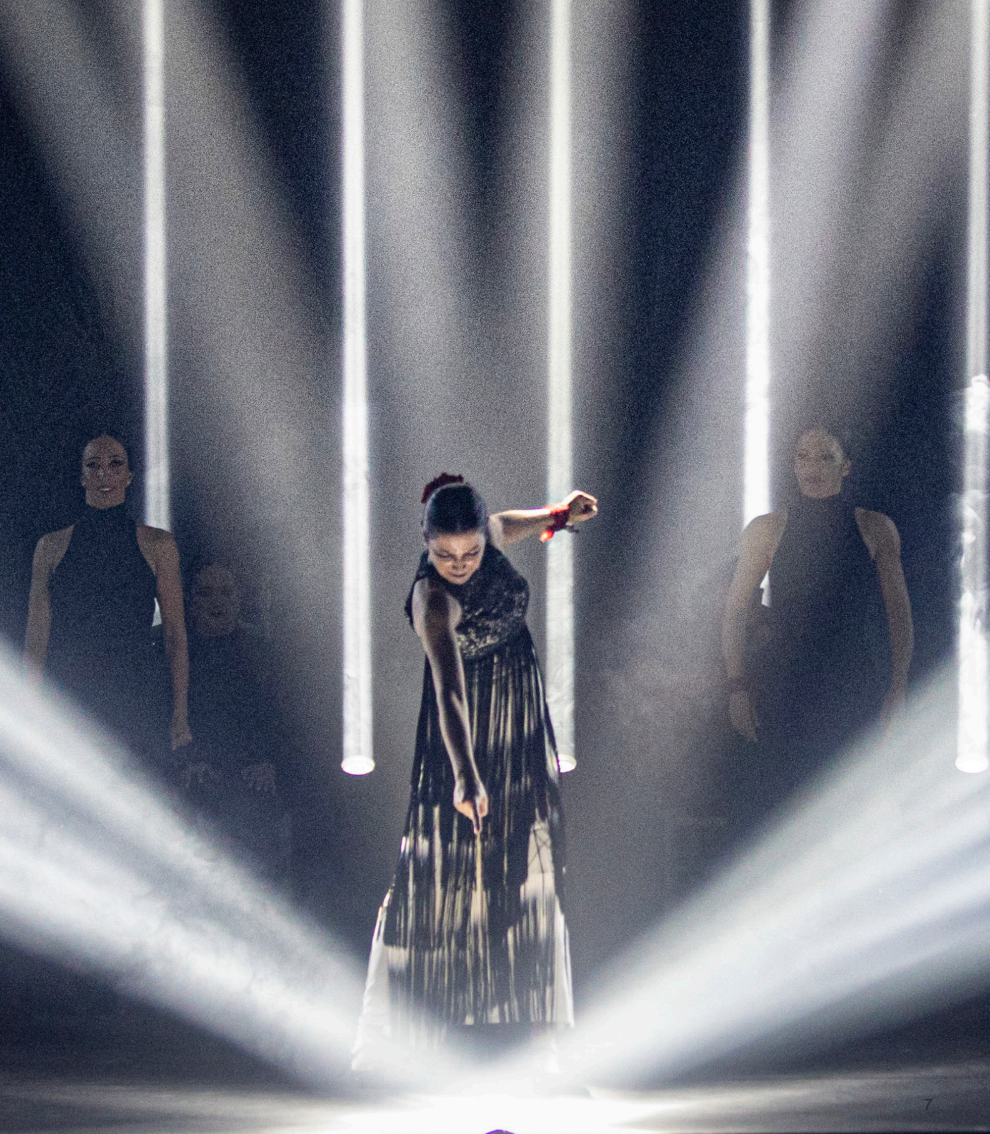
With a cuerpo de baile of one male and six female dancers (including Chula García, Cristina Aldón, Carmen Bejarano, Miriam Peréz, Elena Barba, and my friend from Festival Fin de Verano in San Diego, La Gaditana María Guerrero), two guitarists, two singers, a percussionist, violin and cello, the show was well supported by talented artists in all roles. The program was divided into four thematic sections: Wood, Sea, Death, Fly. The opening presentation was a bit of lovely technical stage-craft, possible only in a big theater like City Center. To several snippets of recorded compositions by Paco de Lucia, special lights were illuminated one by one, first at the lowest level, a single bar of light horizontally across the stage, then another in parallel, quite a few feet above the first, and then, as each new musical selection was cued successively, another beam of white light was triggered, filling in the empty spaces, until we counted six narrow bars of light, evoking six massive guitar strings - a magical yet unseen presence- honoring Paco de Lucía as the giant he was, a revolutionary who made history on the flamenco guitar. I know most of Paco’s music by heart, but I’m not a complete expert, and I didn’t hear so many (any?) of his compositions. I fear the rest of the program was more about Ms. Baras than honoring Paco. I didn’t recognize much of his music until Keko Baldomero played a Soleá mid-show, that could’ve been Paco’s. He sat alone on the darkened stage, again gradually pierced by narrow bands of white light, this time on diagonals and horizontals, and then, once more at the very end of the show when we were treated to his classic rumba Entre Dos Aguas.
Anyhow, Section One: Wood. The joyful first dance presentation was a punishingly complex (for all seven dancers, I’d imagine) zapateado with wooden canes or bastones, heavy on the footwork in counterpoint to rhythms created by the wooden canes. I’ve recently learned that this traditional element of flamenco derives from the old-timers who habitually met at the corner bar to socialize, which naturally included singing flamenco. These viejos were already holding canes for support and they used those to tap out the compás on the floor as an alternative to doing palmas or knuckle-rapping on the table.
Ms. Baras made her first solo appearance in black pants, seated by the guitarist in a sober Minera, followed by a full company Rondeña. Progressing into the Act 2- Sea section; another solo for Sara, with the wonderful cantaor Matías Lopez ‘El Mati’ singing a Tientos/Tangos signifying Air, accompanied also by violin, and this time in her signature costume; a double circle skirt, seeming like the foam atop the waves. The white dress started out looking like a Greek toga, then was used as a cape, as a prop, as a dazzling wave of flowing fabric, as dynamic as the lit fabric of Loië Fuller, enhancing every series of her immaculate turns, almost becoming more important than the dancer herself. Afterwards, in a very illustrative company number we got a barefoot quintet, clad in sea-foam turquoise batas, evoking the cresting ebb and flow of waves on the shore, and using shawls made of fishermen’s nets. This section finished with an instrumental Alegrías.
Act 3: Death. The curtain opens revealing a gigantic incense censor suspended centerstage, from which we later could detect a faint aroma. In a limited space on the front edge of the stage, Sara danced a Siguiriya, traditionally associated with funeral processions, in a duet with Daniel Saltares, where the couple seemed to alternate between affection, competition and revulsion, with fierce footwork, opposing diagonals and tight turns. Tall Daniel had the long, elegant lines and energy we want from a flamenco, well matching Ms. Baras in her intensity and magnetism. Rarely do female and male voices match in range but the two singers (El Mati and May Fernández) have the unique ability to blend voices without the guitarists needing to change their capos to accommodate the difference typical between genders. They were able to alternate seamlessly, sitting up close behind the dancers with the guitarist, and it was a pleasure to listen to this most profound, beautiful palo in the flamenco canon as they took turns leading.
A solemn, cloaked procession of mourners created an effective moment, progressing slowly across and circling the stage, carrying purple iris, ending at an empty chair. After a company dance number Canción de Amor (for the departed?) Sara is again left alone, and while May Fernández sings a powerful Saeta, she kneels at the foot of the chair, evoking an absence. I once had a theater professor who warned us to never under-estimate the intelligence of the audience. I felt almost a like voyeur to a very private moment. Perhaps Ms. Baras has recently lost someone dear, and I felt uncomfortable watching, the moment felt falsa. I cannot judge how an individual processes grief, perhaps this artist needs to channel that emotion through her art form; there have been times when I have done so. Emphasizing the depth of the moment, Sr. Baldomero played a moving Soleá.to close out that portion of the concert.
Act 4: Fly. Having changed the scenery, we now seemed to be in a green garden with palm trees and other botanicals softening the back edge of the stage. Memória, an upbeat Tangos, featured the company women dancing in bright colors, first with one and then with two bright fans each. This dance was one of my preferred moments, and the ladies showed off Ms. Baras’ legitimate choreographic talents, with a dynamic use of techniques, enhanced by the work with the abanicos, cannon, layering etc. A delight for the eye, this is a sure crowd-pleaser.
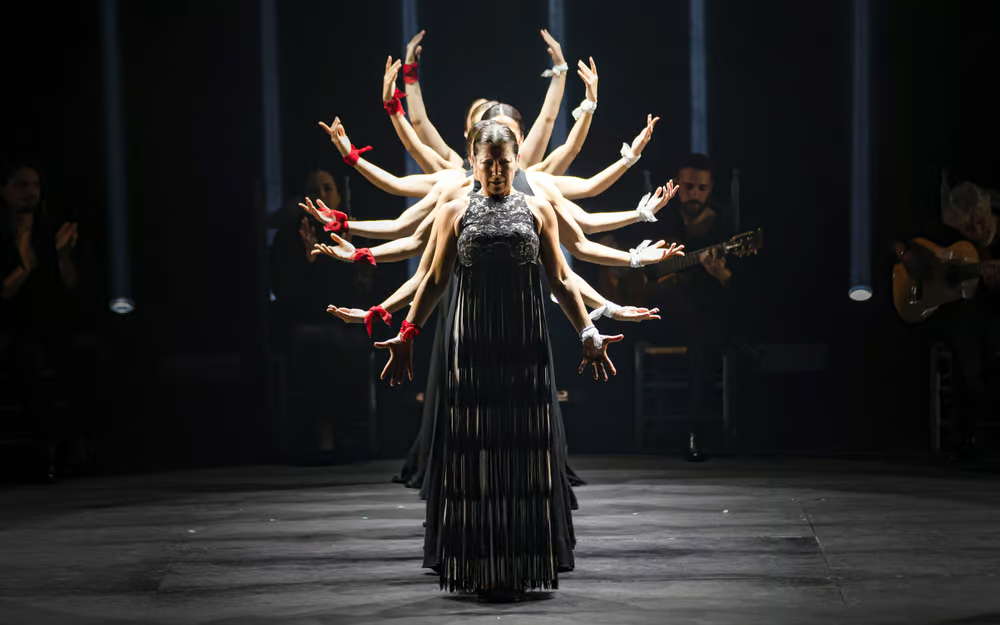
Admittedly almost three weeks have passed between my seeing this show and writing this piece. I didn’t make as many notes as I should have, so I don’t exactly recall the last parts of the show. According to the program Sara then danced a Fandangos called Eternity and a Copla called Soul featuring the violinist Alex Lefevre. To be honest, I found the violin intrusive and extraneous. I do recall the moment where the female dancers lined up behind her and showed us a sort of many-armed Kali goddess. At last, after a group Bulerías the entire company formed a traditional semi-circle at the back of the stage, and Sara danced a long, tour-de-force solo Bulerías. I’m sorry to say, this number got me progressively more upset. While Sara’s technique is stellar and her taconeo virtuoso, I cannot watch/listen to patada after patada, no matter what you are wearing, or how good you are, I am already tired, the show is too long and then, just when we think it is over, because everyone took a bow and she shouted “Thank you, New York”, there are like ten more variations!!! And then a long encore with someone bringing out a stack of mantons and the girls doing another complex number with shawls. I wish I had not already been so oversaturated! I saw a Youtube clip of this number being danced in Times Square and I enjoyed it more, because I wasn’t already at capacity in terms of absorption and appreciation. And then, a fin de fiesta! Another former profesora/director of mine used to say “always leave them wanting more”.
Basta Ya!
March 8th - ROSARIO “LA TREMENDITA” - Joe’s Pub
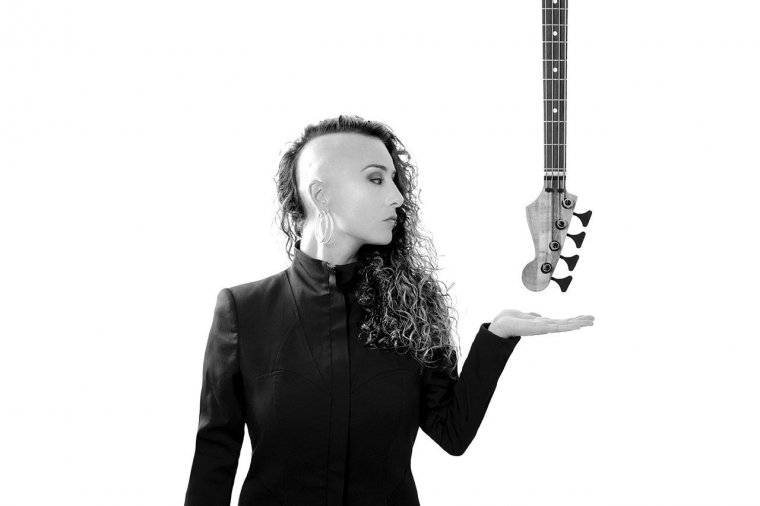
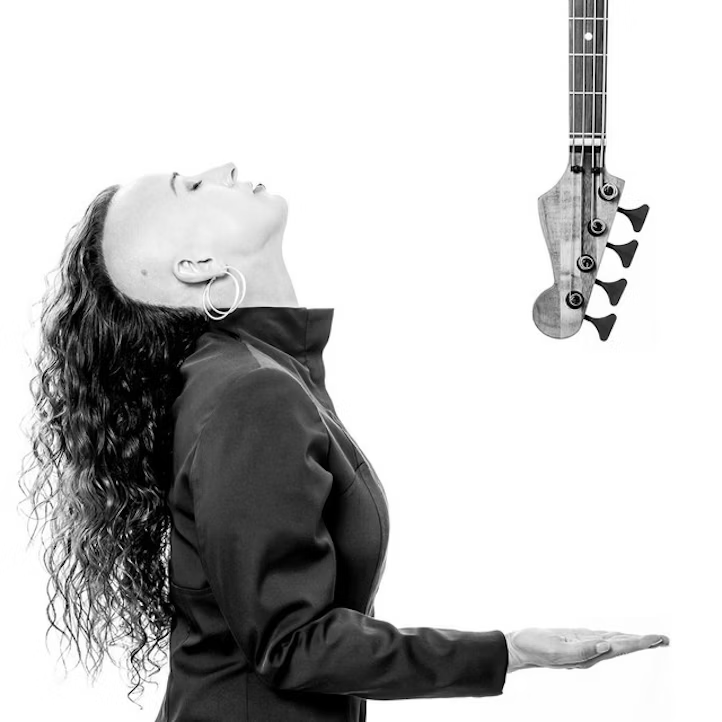
Being unfamiliar with this artist, I went into this show having no expectations and was very pleasantly surprised. Appearing in a modified black leather trench coat, this tower of power woman blew us all away with her interpretation of cante jondo: highly original yet rooted in tradition. Accompanied by Sergio Fargas, the skilled, yet subtle, percussionist and the sensitive guitar lines of Dani de Morón, these artists and this avant-garde protagonist create musical arrangements that wrap around her singing, while she plays electric bass and a little cajon.
Born into a musical family, Rosario had an instrument in her hands before she could even properly talk. Nick-named “The Warrior” in her youth, she used to play in her father’s bar/tablao El Tremendo in Santa Justa, Sevilla. Her cantaor father gave her a deeply authentic Sevilliano flamenco foundation. After some collaboration with jazz and Arabic artists, she has now gone in a new direction, and is creating her unique style wherein her flamenquísimo lyrics repeat while the music develops, evolves and varies with unbridled diversity. Her repetition of lyrics is a great way to ensure that her audience gets what she is saying. Tremendita’s show Transito at Joe’s Pub opened and closed bracked with a piece called Faro (lighthouse), another repetition, a demarcation that squarely places this artist in a category all her own.
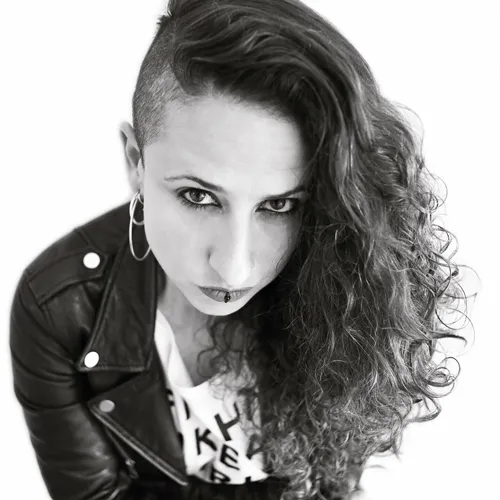
In a Radio KEXP concert I found on Youtube, the host Albina Cabrera, introduced her as …“de Triana, Sevilla, an artist, singer, producer, composer, multi-instrumentalist, and one of the most visionary voices in flamenco and contemporary music” (Live at the Iglesia de Encarnación, Bilbao, España 2025). With Rosario’s deeply expressive vocals, solid bass and Dani de Morón’s poetic guitar adorning, supporting, and weaving around her, the group created an unpredictable mosaic embellished with the sure-fire work of Fargas on the drum kit, keeping flawless compás, relentless as Rock n’ Roll, and using an occasional Drum & Bass vibe on a midi sampler drum pad.
Going into uncommon rhythmic territory for most younger voices in the flamenco world, the group played a Siguiriyas that gave space for the vocals to shine acapella on the compas’ first half of 1y 2y 3, with drums only entering on the compas’ resolution of 123, 123 (many name these beats 4 and 5). They rocked some Tanguillos, alternating between a subtle background texture as a verse was sung, and then louder grabbings of the beat, almost like Punk Rock, on choruses and instrumental sections.
As a child of the 60’s that thrived on Keith Richards and Jimi Hendrix, I was quite satisfied by this show. La Tremendita fulfills the promise made by history’s rock/flamenco collaborators like Ojos de Brujo, Lagartija Nick (on Enrique Morente’s CD Omega), and El Bicho. I’ve grown addicted to flamenco, but never lost my need for Rock, so those albums live rent-free in my head. Tremendita blends my favorite two killer musical forms skillfully. Her bio states: “Her art embodies the delicate balance between tradition and innovation, uniting the roots and the future of flamenco.”
In the interview wrapping up the radio show in Bilbao, Rosario talks about withdrawing in order to reflect on her creative practice. One thing she said that stayed with me: “Everyone is always in such a big rush. I don’t think that art and hurrying go very well together.” (paraphrased). On her 2026 album Menos es Mas (Less is More), she sings “And if I should fall, let me fall, broken dreams that don’t return, the path doesn’t deceive me”. Take your time Rosario, we are waiting patiently, with an appetite and an attitude.

March 11th - MARIO ESCUDERO IN NEW YORK - Instituto Cervantes
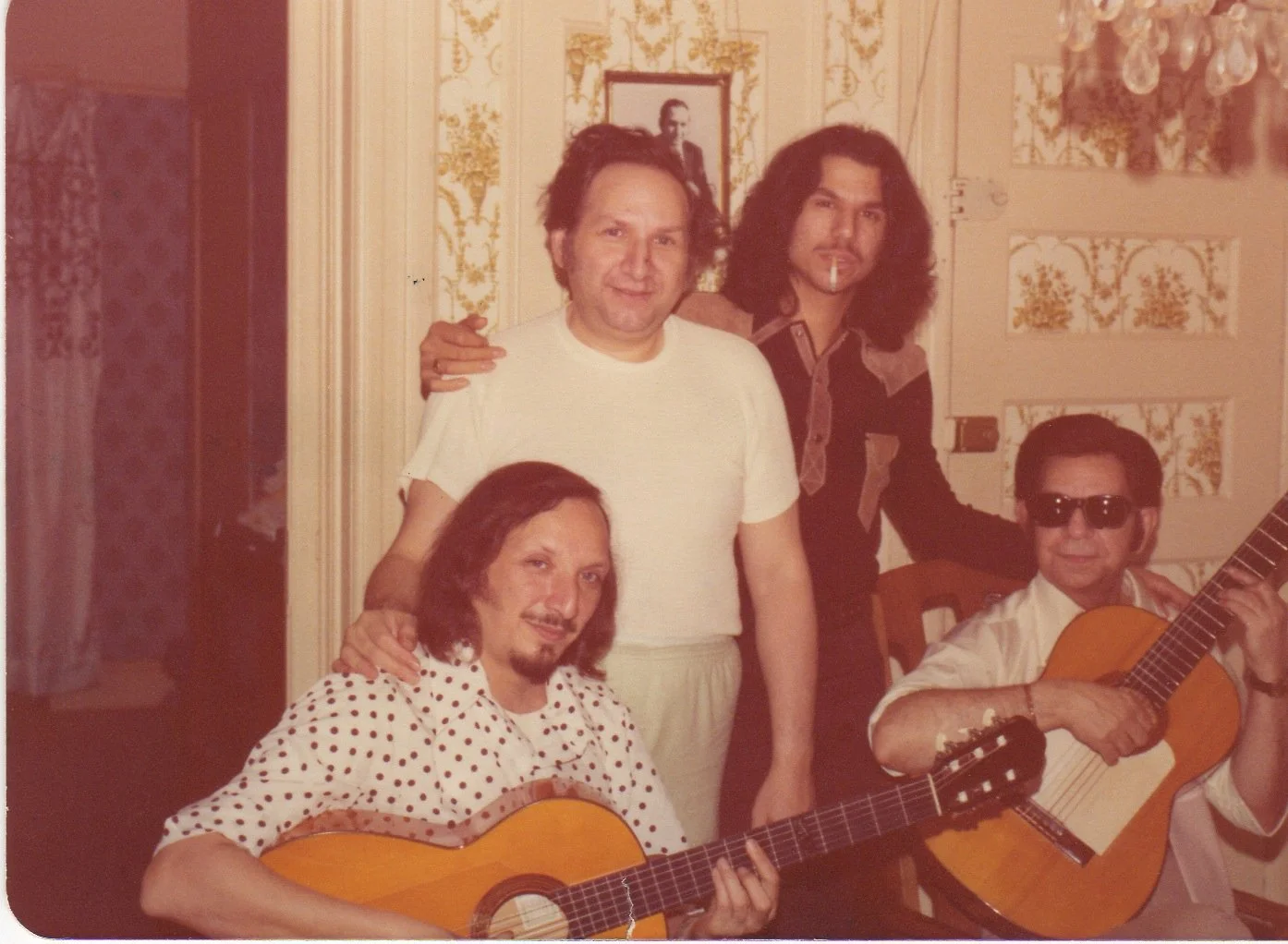
Mario Manuel Escudero, Jr., son of the late guitarist, presented a brief history of the Maestro’s trajectory in music and his life in New York City. Mario Escudero Sr, was born in Alicante of a mother who sang and a Gitano father, a tailor, who played guitar. He, along with Sabicas, was responsible for bringing solo guitarists to the front of the stage as viable artists in their own right, meriting attention and applause even without the exciting spectacle of dance. After a tour of the Americas in the late 1950’s, Mario decided to stay and live in the United States. Here he enjoyed a long, successful career making recordings, playing concerts and teaching. The composer’s most famous work- Impetú - is a classic of flamenco’s most complex manifestation, the bulerias, and is only one of his over 250 original compositions. He played in prestigious venues like Carnegie Hall, Town Hall and at the White House, as well as appearing frequently on television, and touring world-wide.
This lecture-demonstration catalogued his many associations with contemporary composer/musicians, showing slides and maps of places where Spanish music was presented and enjoyed throughout midtown Manhattan and along 14th Street in what was once known as Little Spain. This was the New York with which all artists so easily fell in love, and so he did. The guitarist lived in Midtown Manhattan and he frequented the Spanish restaurants, musical venues, studios and apartments of colleagues and friends, many of which were within walking distance of his home. Although Escudero would tour, record and perform with some of the brightest stars in the flamenco world (Sabicas, la Niña de los Peines, Vicente Escudero, Jose Greco, Carmen Amaya), his prolific recording career (30 records) was relatively short since he was “resentful of the unfair practices of the recording studios” (Wikipedia). Mario was friendly with conductors and composers, and very involved in classical music, as well as other genres like folk. While Escudero played several times with major orchestras and loved to “further his knowledge of harmony and counterpoint” (Wikipedia), by contrast Sabicas stayed closer to traditional flamenco as he made a name for himself on the world stages. Sabicas and Escudero collaborated on three albums; Sabicas said that these were his favorite recordings. According to Pedro Cortes, Jr. Paco de Lucia y Ricardo Modrego later tried to reproduce that kind of collaboration in an homage to those albums, but the final product couldn’t live up to their expectations.
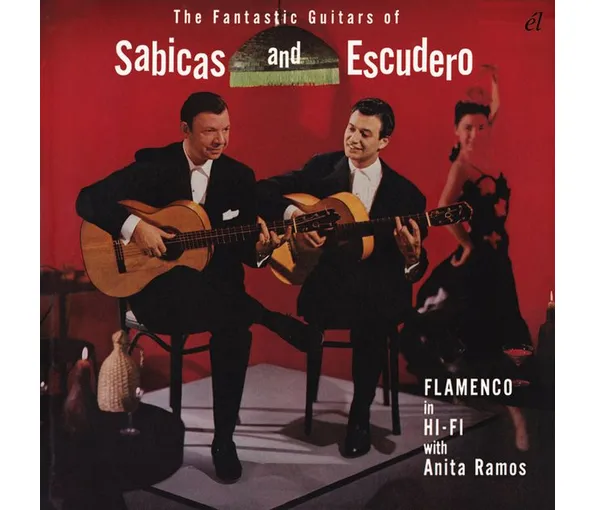
In addition to the interesting slides, the guitarist’s work was brought to life by Álvaro Martinete, an up-and-coming guitarist from Granada. He skillfully rendered a few of Sr. Escudero’s best-loved compositions such as Impetú, Guajiras and Granadina, displaying technical prowess and a fine sensitivity.
Upon reflection, this presentation did a good job illustrating the entire Flamenco Festival’s theme this year: New York and Flamenco: A Love Story. Miguel Marín emphasized this theme as he spoke at the start of every event; and he traced the history from 1889, when Almerian dancer Carmencita first enchanted NYC audiences, up to the present as enthusiastic crowds applaud the spectacles this year at City Center.
As a history buff, I love to recall the halcyon days of Flamenco in NYC, indeed in all of the Americas. In the 1940’s and 50’s not only did Carmen Amaya and her entourage captivate us, but so did Sabicas, Mario Escudero and the Brooklyn-born Jose Greco. As the stress of the Great Depression faded, with post-war optimism society welcomed the free expression of the late 50’s and early 60’s. Before the Vietnam war it was a time of prosperity and expanded social services via the government’s largesse. It seems that everyone fell in love with flamenco: the tablao and floor shows at Chateau Madrid, the movies, the wild popularity of TV personalities like Charo, all expressed an unquenchable joy. Kitschy flamenco art was everywhere: it had an influence on fashion, paintings, films, playing cards, even flocked wall-paper. NYC and Hollywood alike were alive with all of this Spanish essence. It was the hey-day of Mario Escudero.
Upon my arrival in 1984 I caught the last vestiges of this quotidian NYC flamenco culture; El Parral, Rio Mar and Meson España still operated on 14th St. Sabicas’ brother Tío Diego (Castellón) used to walk along 14th St between venues and play table-side, as did Los Hermanos Cintron, in those days still dressed as Spanish Tunas, (Medieval Minstrels). There used to be 20 to 50 Spanish restaurants all over Manhattan; in any one of them you could request that the proprietor turn off the stereo and let a few festeros improvise a party for themselves and any bystanders. Accompanied by my then flamenco guitarist boyfriend, I experienced a few juergas, but the enchantment with all things Spanish was already gradually waning under waves of gentrification and corporate sameness. Our flamenco love still burns brightly in isolation, but community is increasingly difficult to find. Those places disappeared one-by-one, and now I wonder; where can we unite to share this kind of experience? We are lucky to still have Alegrias/La Nacional!
.png)
March 15th - TRIBUTE TO SABICAS - Town Hall
Gerardo Nuñez, Antonio Rey, Álvaro Martinete, Special Guest Olga Pericet
This concert featured three generations of accomplished flamenco guitarists paying tribute to the music of Sabicas. Each guitarist was given a chance to individually shine and then various combinations were created, joined for three numbers by the dancer Olga Pericet. It was a pleasant night of entertainment, but under-achieving as a tribute to a giant of the Flamenco Guitar. Not being a guitarist, I wasn’t sure of how many of Sabicas’ compositions were played (Punta y Tacón was on the program), but a guitarist friend expressed his disappointment that there weren’t more. Honestly, I haven’t much understood or appreciated the flamenco guitar styling of this period, to my uneducated ears it just seems like so many spiders jumping. Fast. (Apologies!) I prefer Paco de Lucía, Moraine Chico, Tomatito, or V. Amigo. The old school guitarists were on the wane before I developed an interest in flamenco. As a dancer, I followed other artists; only later did I understand that the guitar is more than a necessary adjunct to the dancer and singer. I’ve always loved the guitar: as a small child I adored a Grammy-winning album my mother used to play Duets with the Spanish Guitar, by Brazilian guitarist Laurindo Almeida and soprano Salli Terri. Now I cannot live without the flamenco guitar, but my knowledge of this seminal instrument doesn’t compare with other experts’. Therefore, I’ve turned to one who does know what he is talking about: Pedro Cortes’, Jr. who grew up around both Sabicas and Mario Escudero, as they visited with Pedro’s guitarist father Pedro Cortes, Sr. on a regular basis.
INTERVIEW WITH PEDRO CORTÉS, JR.:
Maya: What was it like to grow up around these guitarists?
Pedro: They didn’t seem like big stars; to me they were just like my uncles. But I knew they were special, and they were always playing with my dad (Pedro Cortes, Sr.). His repertory ended up being about 80% Sabicas and 20% Escudero. It was magical, to have them around all the time, playing and influencing each other and my father, and I was playing right alongside all three, studying their work and developing my own technique.
Maya: Why do you think Sabicas is so revered by the Gitano community, but the legacy of Escudero doesn’t really enjoy that same status?
Pedro: Sabicas was more well known than Escudero, despite his genius. They both followed the school of Ramon Montoya, but Escudero played harmonies and made compositions more based in classical music. His most famous piece Impeteú uses arpeggio technique from a classical piece by Fernando Villalobos.
Paco de Lucía, Tomatito, or V. Amigo. The old school guitarists were on the wane before I developed an interest in flamenco. As a dancer, I followed other artists; only later did I start to understand that
Maya: What did you think of the Tribute to Sabicas concert at Town Hall?
Pedro: I really don’t understand how one can call it a tribute to a certain artist and then hardly play any of his work! We didn’t hear one entire piece by Sabicas- I think it was just one tiny falseta and then nothing else! It was all compositions by other musicians. But, really, it was Antonio Rey’s show. He embodies the legacy of Paco de Lucía. He plays beautiful chords, and then soft legado, but when it is called for he can rip with rage. Nuñez’ suffered an injury, smashing his finger in a door some years ago, and he just cannot manage the technique that he once had, so he fosters the growing career of the young Álvaro Martinete. Martinete has a soft touch and plays with precision, but he just doesn’t exhibit the fire and intensity of Sr. Rey.
Maya: Where do you see the art of toque flamenco going in the future? Pedro: “You should watch the documentary Flamenco Passion, Pasión en Peligro, a movie I made with La Susi, Diego Amador, Jesus Montoya and myself. You can find it on my website pedrocortes.com. To be popular is not the same as being authentic. Fusion is too often CON-fusion. Hardly anybody these days records a Taranta, or a Solea - it’s almost all Rumba, Tangos and a few Bulerias. With the exception of the singer Israel Fernandez. Where is the real flamenco?”
(Note: I did not record this interview, so I have paraphrased some of Cortes’ words, and I did my best to stay true to his statements.)
.png)
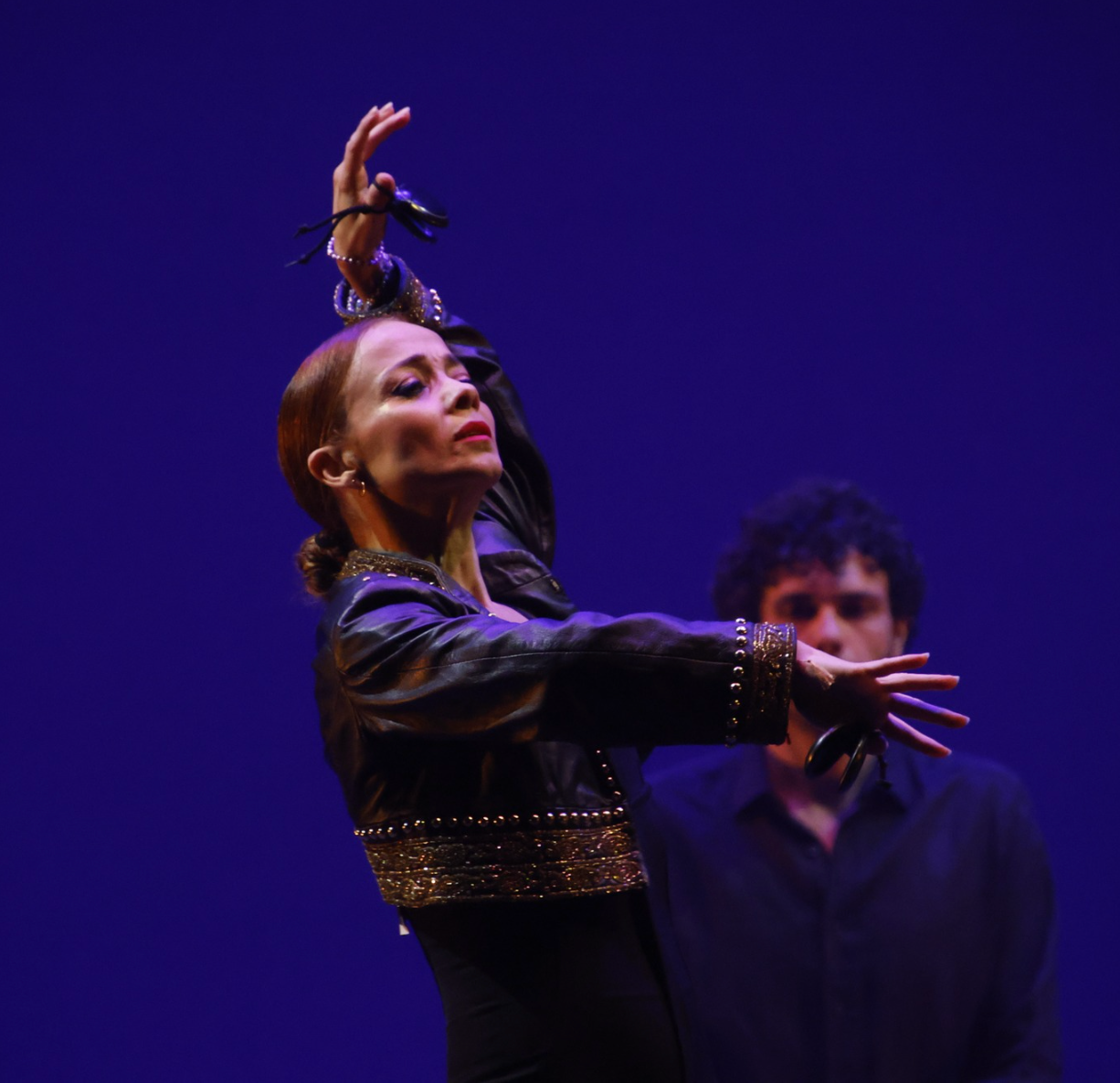
One thing I can comment on with more authority is dancer Olga Pericet who embodied the memory of Carmen Amaya in this tribute to Sabicas. The partnership between Sabicas and Carmen Amaya is well documented, the guitarist accompanied Carmen on tours throughout the Americas and during her historic appearances at Carnegie Hall in the early 1940’s. Their collaboration was extremely well received and was the heart of Carmen Amaya’s family company; their partnership lasted many years and it was more than merely professional. According to the Carmen Amaya Wikipedia site “during most of those years in America the bailaora maintained a personal relationship with Sabicas who declared shortly before his death that he and Carmen had been dating for nine years.” The two artists had an extraordinary influence one upon the other and, according to DeFlamenco.com, “Carmen’s flamenco legacy is still valid to this day as an example of dancing with force, meter, intensity, power and a way of expression which brought an end to the sweetness of flamenco which had endured until that point”.
What a challenge to embody such a legacy! I admire Ms. Pericet for her willingness to take up that gauntlet, however the technical aspects at Town Hall, along with an inherently difficult premise, made this an uphill battle. A similar body type worked in favor of the illusion, and the first dance number, in a costume similar to her famous velvet skirt and jacket, came close to the goal. Ms. Pericet believably recreated much of Carmen’s attitude, poses, styling and lines. She executed rather weak footwork (or maybe it seemed weak, because I couldn’t hear it!), competent turns, but was not really dynamic. How can anyone ever reproduce the unique personality and savage talent of Carmen Amaya? How could anyone evoke the same awe we feel watching Amaya’s historic performances? The second dance number, in pants, didn’t really work for me and the Guajiras, in the white bata de cola made famous by the superstar, was truly unfortunate. Aside from the fact that Town Hall’s lighting technician either didn’t care to, or wasn’t able to light the dancer, the bodice of her dress was woefully unfitted. All I could think of was why in the world hadn’t it been tailored properly? The director included a dancer as a draw for those who aren’t aficionados of the flamenco guitar, but then didn’t even mic her footwork! Town Hall failed to give her the technical support she deserved, I don’t understand why the show’s director did not insist that her efforts be properly respected. This is not a criticism of the valiente Olga Pericet.
Antonio Rey is a phenomena in the world of flamenco guitar and his incredible technique dominated this show. It was lovely and nostalgic to hear Gerardo Nuñez’ toque, but he only played a very short number. It’s funny, and hard to believe, that I’m such an old timer that I’m now in his same historical category. Ay, yay, yay!
FINAL THOUGHTS
Thus concludes my reviews of the NYC Flamenco Festival 2026. I’d like to add a personal note. For 25 years I have been to at least one, and often many events, at every single one of these festivals. I have been studying and dancing for 40+ years. I may not have much influence, nevertheless I will speak (write) my mind. We NYC flamencos manage to scrape together a living, some do financially better than others, but our level of afición and dedication does not vary. It would be SO lovely if there was a certain validation of our commitment via one or more of the following:
● Better Promotion, Please! I wonder if you could put together an email or snail-mail list to let us know what the heck is planned? I am always missing a lot of events because I did not know about them. Yes, I could go to the website, but I forget and the shows sell out, etc. Let us know where the printed brochures are available! I didn’t manage to get my hands on one until the 4th of March when the thing was more than half over already. I only got a virtual version because I asked the Education Dept. at City Center where I am a Teaching Artist. How many others were unaware of the entire program? Many, I can tell you for sure. It was impossible to reserve space for the Estevez/Paños thing at NYU, and the Met Museum event on Carmencita was sold out before I could reserve.
● Package Deal: I am not rich by any stretch of the imagination, but I spend a LOT of money on the Festival. Couldn’t there be some kind of professional or loyalty discount? For example, if you are buying tickets to 5+ shows, you get a 5, or even 10% discount? I know your profit margins are probably slim, but come on! We support you!
● More Variety: I understand that Yerbabuena and Baras are solid bets to fill the theater, but there must be other big shows ready for prime time. These ladies, while great, have been on repeat for years! Between Liñán’s mantón and Sara Baras’ ubiquitous skirt, it was the Festival of Fabric! Haha!
More flamenco and less flash, please. I do realize that visas are an issue and you must rely on administrators with proven records of getting through the red tape in a timely manner, but personally I would like more variety. We haven’t seen Rocío Molina in quite some time, what about Eduardo Guerrero? It would've been great to see the Gades’ company’s version of Carmen that I saw in Sevilla at the Maestranza in September. The variety we see in the smaller venues IS much appreciated, can we have more in the bigger venues as well?

.png)


.png)
.png)
SUPPORT
Ignite the transformative power of flamenco for all.
Your tax deductible donation goes directly to artists and programs. We can't do it alone. Your support makes all the difference!

