Homenaje a Triana
Tags
«¿Qué cantan aquí? ¿Qué tipo de bulerías son estas?» Eso es lo que me preguntó un amigo y bailarín de flamenco el otro día. Resultó que encontrar una respuesta me llevó a un análisis mucho más profundo de lo que ella estaba pidiendo. Mi investigación me inspiró a escribir este artículo. Primero, echemos un vistazo al vídeo del que hablaba.
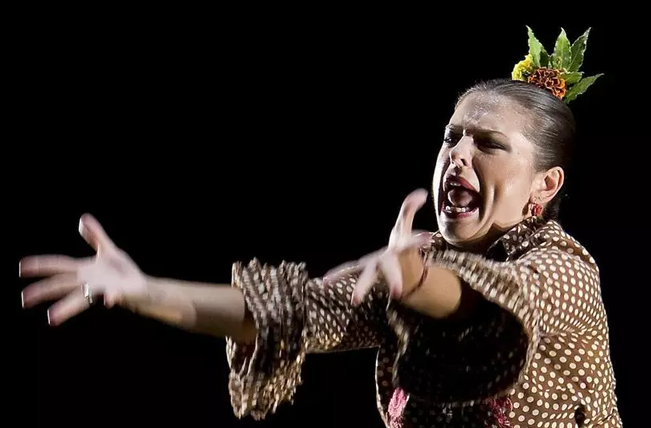
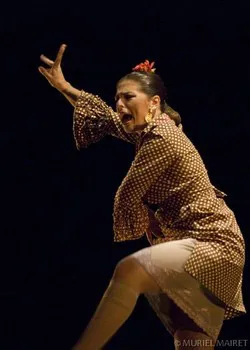
Este es un número muy divertido de la bailarina Pastora Galván con ¡mucho arte! También debes tener en cuenta que no hay un solo paso de zapateado o trabajo con tacones.
Hay mucho material para desenterrar en esta hermosa obra de arte. Pastora está acompañada, desde la izquierda de la pantalla, por uno de los palmeros más importantes de Sevilla, José Jiménez Santiago «El Bobote», el cantaor que triunfó en la última Bienal de Flamenco 2012, José Valencia; el cantaor y palmero Cristian Guerrero, y el veterano guitarrista Ramón Amador, tío de Raimundo y Rafael Amador de la legendaria banda Pata Negra, y el pianista Diego Amador «El Churro». Río»
La escena que están recreando aquí es sacada directamente de patio de vecinos del popular barrio sevillano de Triana (un patio de vecinos es un tipo de edificio de vecindad con un patio interior que alguna vez fue la vivienda típica de Triana). Pastora Galván lleva un bata (bata) y pantuflas, como si estuviera cómoda en casa divirtiéndose con su familia. El retrato es de una señora en un entorno tradicional, tal vez en una época entre las décadas de 1930 o 1960 que en realidad ya no existe debido a nuestro estilo de vida moderno y al aburguesamiento del propio vecindario.
¡Empecemos a analizar! Como suele ocurrir en el flamenco, esta pieza, a ritmo de bulería, es una mezcla de diferentes fragmentos de música popular española y formas o composiciones de bulerías que abarcan más de un siglo. A pesar de ello, es sorprendente lo perfecta que es la obra de estos artistas, sin dar muchos indicios de lo diversas que son sus fuentes.
La introducción a esta pieza es la música de una hermosa copla o canción popular española titulada Escala guindas al pavo. Esta canción fue compuesta por Ramón Pelleró Ródenas para la película Morena Clara (1936) —la película favorita de mi abuelo— en la que la legendaria coplera Imperio Argentina interpretó el papel de gitana Chica (romaní) con el corazón roto por un señorito (chico rico) de la alta sociedad.
Las primeras series de letras que se escriben a continuación, muy insinuantes sexualmente por cierto, son del poeta y escritor José Manuel Caballero Bonald, un experto en flamenco que aparece varias veces en la serie documental de la década de 1970 Rito y Geografía del Cante Flamenco. Fueron grabadas originalmente en la bulería «Siete Horitas Seguias» de El Turronero en su álbum «Cantes Viejos» de 1976. Ve al minuto 2:22 en este reproductor de Spotify para escucharlos:
Estos artistas siguen extrayendo material de un verdadero genio como Manuel Molina, el artista y antiguo compañero en la vida real de Lole Montoya. El estilo propio de Manuel Molina, el poeta de El Tardón, uno de los barrios de Triana, es inconfundible en esta estrofa.
Como curiosidad, puedes ver al artista español de música pop Alejandro Sanz cantando una versión de estas letras en el minuto 2:05 de este vídeo:
Alrededor de la 1:31 (después de que Pastora cierre sentándose en la mesa), volvemos al español copla, cuando escuchamos ¡Triana, Triana! Esta canción fue interpretada, una vez más, por Imperio Argentina para la película titulada Carmen la de Triana (1938). Esta película se rodó en la Alemania nazi durante la Guerra Civil española. Este género de películas, lleno de tradiciones cursis, formó parte en gran medida de las políticas propagandísticas del régimen fascista del dictador Francisco Franco. A pesar del carácter melodramático de estas películas, en ellas se puede encontrar música de gran calidad. Durante el rodaje de Carmen la de Triana se dice que Adolph Hitler intentó salir con Imperio Argentina sin mucha suerte.
¡Triana! ¡Ay, mi Triana!
De tu rio en el cristal
cuántas veces me miré
y en tus calles de jazmines perfuman
el frente me besó la luna.
Yo no tengo más tesoro ni cantar
que el barrio que meció mi cuna.
¡Ay, las campanas de mi Santa Ana!
¡Ay, ay!
Solares trianeras,
quejíos del alma son
más florida cuando vuelva
Triana, te comí la muerte.
Yo te quiero, barrio mío,
A Dios pongo por testigo
Aaaaayyy mi Triana,
Aaaaayyy mi Triana,
Aaaaayyy las campanas
Ay de Santa...
Triana ¡Ay, Triana mía!
Cuántas veces
He mirado tu reflejo
En el río, como un espejo.
En tus calles con aroma a jazmín
La luna me besó en la frente.
No quiero tesoros ni fortuna
Solo el barrio que es mi cuna.
¡Ay las campanas de mi Santa Ana!
¡Ay, ay!
Soleáres de Triana
Son gritos del alma
Más florecerá cuando regrese
Triana, tengo que verte.
Te quiero, mi barrio,
Pongo a Dios como testigo
¡Adelante mi Triana!
¡Adelante mi Triana!
En las campanas
De Saint...
Aquí está Carmen la de Triana, Imperio Argentina, cantando ¡Triana, Triana!
El número de Pastora continúa con lo que podríamos considerar un conjunto de letras mucho más propias de la tradición oral flamenca. Escuchamos letras de Jerez, el lugar de nacimiento de la bulería. En este momento, la actuación está llegando a un clímax, entrando en un modo hipnótico, en un paroxismo. La letra de la canción funciona como un scat.
------letras faltantes ------
Utrera y Lebrija, estas dos ciudades de la provincia de Sevilla son muy importantes en la historia del flamenco, como bien sabrás, pero también porque los artistas gitanos (romaníes) de allí han conservado un conjunto de romances (baladas, que solían formar parte de la cultura popular, gracias a artistas itinerantes ciegos que las interpretaban en las calles y plazas) y alboreás (canciones de boda gitanas) que tienen un sabor muy distinto y magnífico.
Yo vengo de Utrera
Yo vengo de Utrera
yo vengo vendiendo bollas y cazuelas
Es que te quiero
Te quiero
te quiero
te quiero
te quiero
More that the mother
que te parió
Vengo de Utrera
Vengo de Utrera
Vengo vendiendo ollas y sartenes.
Es que te quiero
Te quiero
Te quiero
Te quiero
Incluso más que la madre
quien te dio a luz.
En este vídeo de la serie Rito y Geografía del Cante Flamenco, podemos ver a un jovencísimo Miguel Funi y al guitarrista Pedro Bacán, ambos de Lebrija, interpretando estos romances y alboreás. En el minuto 12:26 Miguel Funi interpreta la estrofa sobre venir de Utrera de la pieza de Pastora Galván.
En este punto, todo lo que sale del canto de José Valencia es casi ininteligible. Es como si los intérpretes hubieran alcanzado un estado de trance que no pudiera inspirar más que alegría. ¡A estas alturas, nadie puede negar que esto es «lo real»!
Puedes decir que es flamenco puro, pero ¿cómo se puede describir como puro algo que va y viene en el tiempo utilizando material del siglo XIX, a la década de 1930, a la década de 1970, de ida y vuelta una y otra vez? Se trata de un híbrido, una fusión de estilos dentro del flamenco que también se inspira en la música popular española. ¿Qué estándares utilizamos para calificar una actuación como esta como «pura»?
Al usar una terminología como esa, nos limitamos a una categorización muy sesgada y simplista. Lo que los «puristas» del flamenco pueden considerar flamenco puro es una respuesta a sus propias referencias culturales y a la adhesión a estilos que adquirieron en una época en la que cierta tendencia estaba de moda, quizás cuando eran jóvenes, y la perciben a través de una lente romántica mezclada con nostalgia y melancolía.
Una actuación como esta es pura porque te conmueve. Es arte puro y llega hasta lo más profundo de tu ser. Por eso prefiero el término arte puro, porque describe la esencia de la actuación y evita la discriminación y la simplificación. En palabras de la gran bailarina Eva la Yerbabuena:
«El flamenco es un arte fruto de la mezcolanza. La única pureza que existe está en la honestidad del artista».
«El flamenco es un arte que es el fruto de una mezcla. La única pureza que existe está en la honestidad del artista».
Me gustaría dar las gracias a mi madre, Alejandra Cid Pagador, por ayudarme con sus conocimientos de flamenco y español copla; José Manuel Gamboa por el par de excelentes protagonistas sobre Ramón Amador, El Turronero y Manuel Molina; Martha Kessler, mi querida esposa por ayudarme con la edición, y mi amiga y bailaora de flamenco Sabrina Aviles por señalarme esta hermosa actuación de Pastora Galván. Sabrina, ¡espero que esto responda a tu pregunta!
Works Cited/Further Reading
- alfonsocid.com
- https://www.deflamenco.com/revista/resenas-actuaciones/pastora-galvan-el-tacon-la-zapatilla-y-la-poca-verguenza.html
- https://expoflamenco.com/en/magazine/Pastor-Galvan-Empeto-Torres-Macarena/
- Imagen de cabecera: Pastora Galván bailando el tango, crédito fotográfico: Eduardo Abad para Diario de Sevilla

.png)

COLABORA
Brinda el poder transformador del flamenco a todos. Tu donación marca la diferencia.

