The Space Between Sounds: Dialogue and Connection in Flamenco

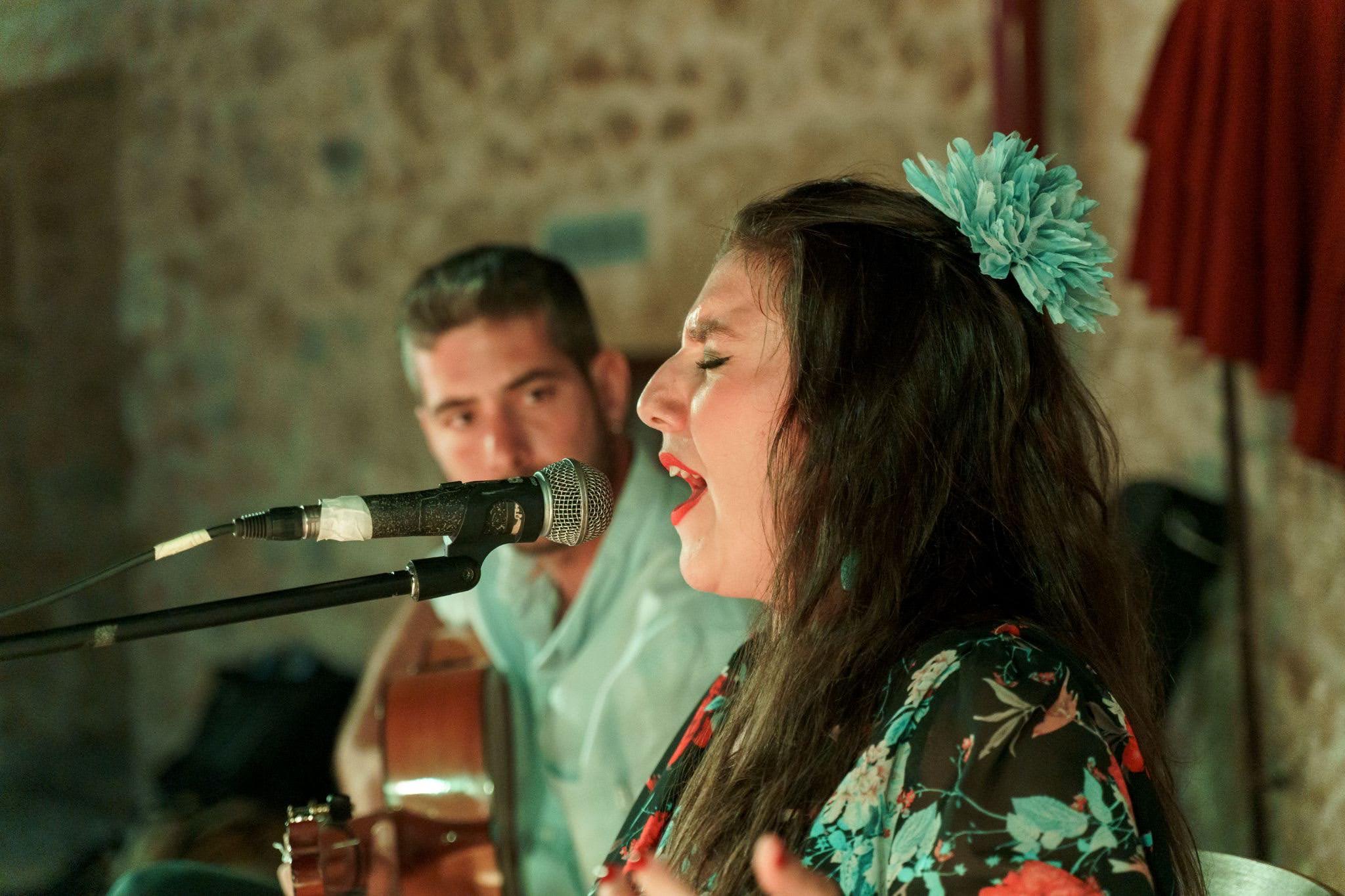
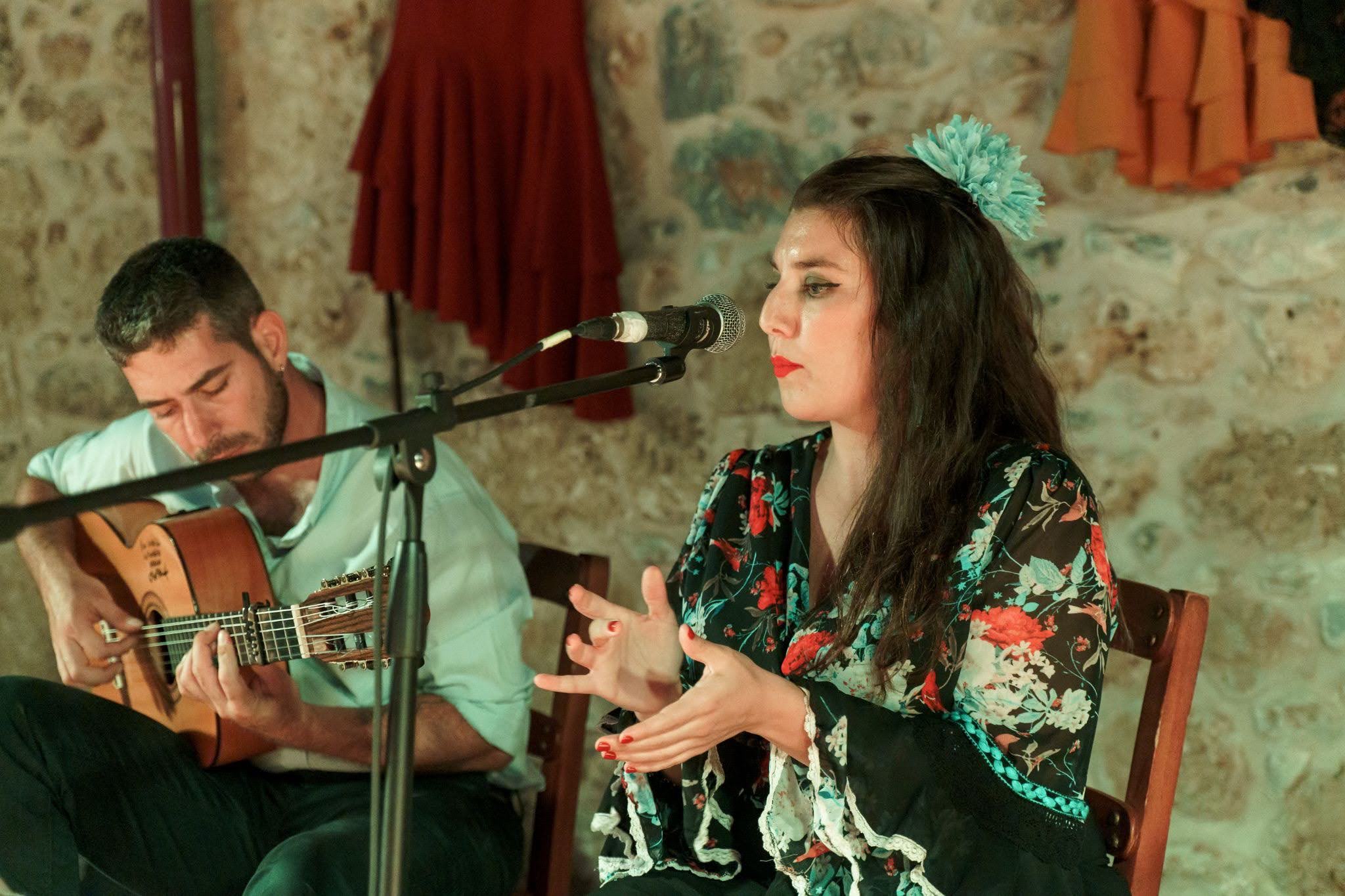
In flamenco, communication is not limited to sound or movement; it takes the form of a living dialogue. Between the singer, the guitarist and the dancer, a dynamic exchange develops that is not based on words, but on glances, rhythms, pauses, and immediate responses. Every phrase of the singing and every touch of the guitar does not function independently; it requires the presence of the other in order to acquire meaning.
It is a silent dialogue in which the essence lies not only in what is expressed, but mainly in the way it is perceived and transformed through the relationship itself. Expression is never one-sided; it returns, changes, and responds. Through this process, communication ceases to be a simple transmission and becomes a shared experience.
And at that point, a deeper question emerges: what does it truly mean to listen to another person?
Listening as Genuine Understanding
In everyday life, listening often becomes a superficial process. We do not truly listen in order to understand, but rather to prepare our response. The words of the other person become an opportunity for our own intervention instead of a space for encounter. In this way, communication loses its dialogical nature and turns into a sequence of parallel monologues.
In flamenco, such an attitude could never function. The dialogue that unfolds requires a deeper form of listening—an attention directed not only toward sound, but also toward intention, emotional intensity, and timing. The guitarist does not merely listen to the singer or the dancer; he senses the shifts, the pauses, and the emotional states. Likewise, every response is not predetermined, but born from an understanding of what is happening at that exact moment.
Only through this deep understanding can genuine responsiveness exist. And only then does dialogue cease to be a simple exchange and become a living act of shared creation.

Responsiveness as the Creation of Relationship
In a real dialogue, meaning does not pre-exist nor belong exclusively to either side; it is formed through interaction itself. It emerges in the space between people, where one person’s action meets the response of another. In this sense, dialogue is not simply an exchange, but a process of co-creation.
Something similar happens in flamenco. A foot step does not become complete on its own; it acquires meaning when it finds its response in the guitar. Likewise, a phrase played by the guitar does not carry the same emotional weight unless it is understood by the dancer — unless its intention is recognized and appropriately answered.
Within this dynamic, the singer is not merely another “voice”, but a living emotional center around which the tension is organized. The others must truly listen to the singer: to recognize when space is needed to breathe, when emotion is being held back, and when the moment arrives in which the singer wishes to release the full weight of feeling. This is not mechanical accompaniment, but a subtle understanding of another person’s emotional journey.
The essence, therefore, does not lie in isolated actions, but in the relationship that connects them. It is responsiveness that transforms sound into communication and communication into a living relationship.
The Importance of Silence and Space
In flamenco, what is not heard is often just as important as what is heard. Pauses are not simply empty spaces between movements or musical phrases; they are moments of tension and anticipation, moments in which communication continues to exist even within silence.
In human relationships, there is often a need to fill every silence. Silence is frequently perceived as discomfort or absence of connection. In flamenco, however, pauses function differently. They create space for the other person to express themselves, to breathe, and to complete their emotional expression before the next response arrives.
The guitarist knows when to withdraw in order to allow the voice to reach its climax. The dancer understands when slowing down and holding back creates greater emotional intensity than constant movement. Through this silent understanding, communication gains greater depth.
Perhaps true listening is expressed not only through response, but also through the ability to leave space for another person to exist.
Conclusion
Perhaps flamenco ultimately reminds us of something that is gradually disappearing from contemporary human communication: meaningful communication requires a willingness for deep connection.
We live in a time in which many human relationships are characterized by speed, superficiality, and impermanence. People often relate to one another without truly investing in each other; without the intention to remain long enough to understand, to listen deeply, and to genuinely coexist. When this desire for connection is absent, patience, presence, understanding, and the space we give to others naturally diminish as well.
In flamenco, however, none of these elements can be absent. The dialogue between the singer, guitarist, and dancer requires dedication to the moment and constant attentiveness toward one another. It is not enough to listen superficially; one must be truly present. One must perceive even the slightest changes in intensity, breath, and emotion.
Perhaps this is what makes flamenco profoundly human: its art is not based solely on expression, but on genuine encounter. In an era in which people increasingly struggle to form deep connections, flamenco seems to remind us that no authentic communication can exist without attention, presence, and the willingness to truly listen to another person.
Works Cited/Further Reading
To see these principles in practice watch TRIANA PURA - DE FIESTA CON TRIANA PURA
.png)



.png)
.png)
SUPPORT
Ignite the transformative power of flamenco for all.
Your tax deductible donation goes directly to artists and programs. We can't do it alone. Your support makes all the difference!

