The Right to Remember: Flamenco, Mediation, and Romani Counter-Archives in Southern Spain
.png)
Presentation as part of DIGITAL DUENDE, a two-day bilingual symposium hosted by Flamenco Arts International and Stanford University (December 3-4, 2025). Digital Duende examines how emerging technologies have influenced and continue to influence the creation, preservation, performance, and dissemination of flamenco throughout the art form’s history.
--
Introitus
Good afternoon, or good morning, and thank you very much for the invitation, especially to Isabel del Día and Marina Scannell. Speaking about flamenco outside Spain — and doing so, moreover, from a conflicted Roma perspective — always places me in a strange position: caught between the pleasure of sharing and the responsibility of not betraying a knowledge that is communal, intimate, and, very often, fragile.
Today I have come to speak about memory, but above all about a tension: the tension between Roma ways of remembering and the technological devices that, for over a century, have tried to capture something that, by its very nature, neither wants nor can be captured.
Capture.
I want to begin with a clear idea, one that runs through everything I will say: flamenco is built upon a problem — how to capture what does not want to be captured. How to fix into an object something that, for Roma people, though not only for us, exists fully only in relation, in the body, and in the moment. And that problem — that clash between the temporality of cante and the temporality of the machine — is one of the central threads we will follow in this talk.
Those of us who work with what might be called the Colonial Library of Flamenco1 — all those books piled up from Don Preciso, George Borrow, Estébanez, Demófilo, all the way to the anthologies, essays, papers, websites, blogs, and most recent studies — know there is a recurring temptation: to believe as true whatever is written down.2 What will ChatGPT's flamenco look like? What are we to do with the digital flamenco archive of Facebook, Instagram, or TikTok?
We forget, as the historian Fernando Bouza reminds us — and here we take a small detour to situate our relationship with the written page — that in the Early Modern period it was common practice for town councils to buy old books and papers “by the pound” to fuel bonfires and fireworks on feast days.3 In other words: a great part of the archive of the past was burned for public entertainment. What we today call “sources” is not the total deposit of a memory, but rather what survived by chance, by neglect, or by interest. We have access to an infinitesimal fraction of the past, we look through a tiny hole, and yet we build entire systems of interpretation upon that hole.
But Roma memory does not work that way. Its truth passes through other filters, other rhythms, other forms of transmission, very often oral and embodied. Other senses. And yet, there are episodes that show that this tension between the written archive and Roma memory is not binary but profoundly ambivalent. Let us take one of them: the, perhaps already legendary, story of Joaquín el de la Paula and the recording of his cante, which will serve here as a kind of literary backdrop, almost a piece of storytelling.4 It is said that Joaquín refused to record because he did not want anyone to hear him without being present to be paid. Yet at the same time, his own family — knowing he was dying — insisted on recording him, to save his voice, so that the irrepeatable time of his cante would not be lost. That ambivalence is key. The technology of memory — the record, the tape, the reel-to-reel recorder, the video — does not merely extract. It also wants to capture the sense of Roma time, that time which is non-linear, expansive, festive, ritual, and does not fit into a three-minute track.
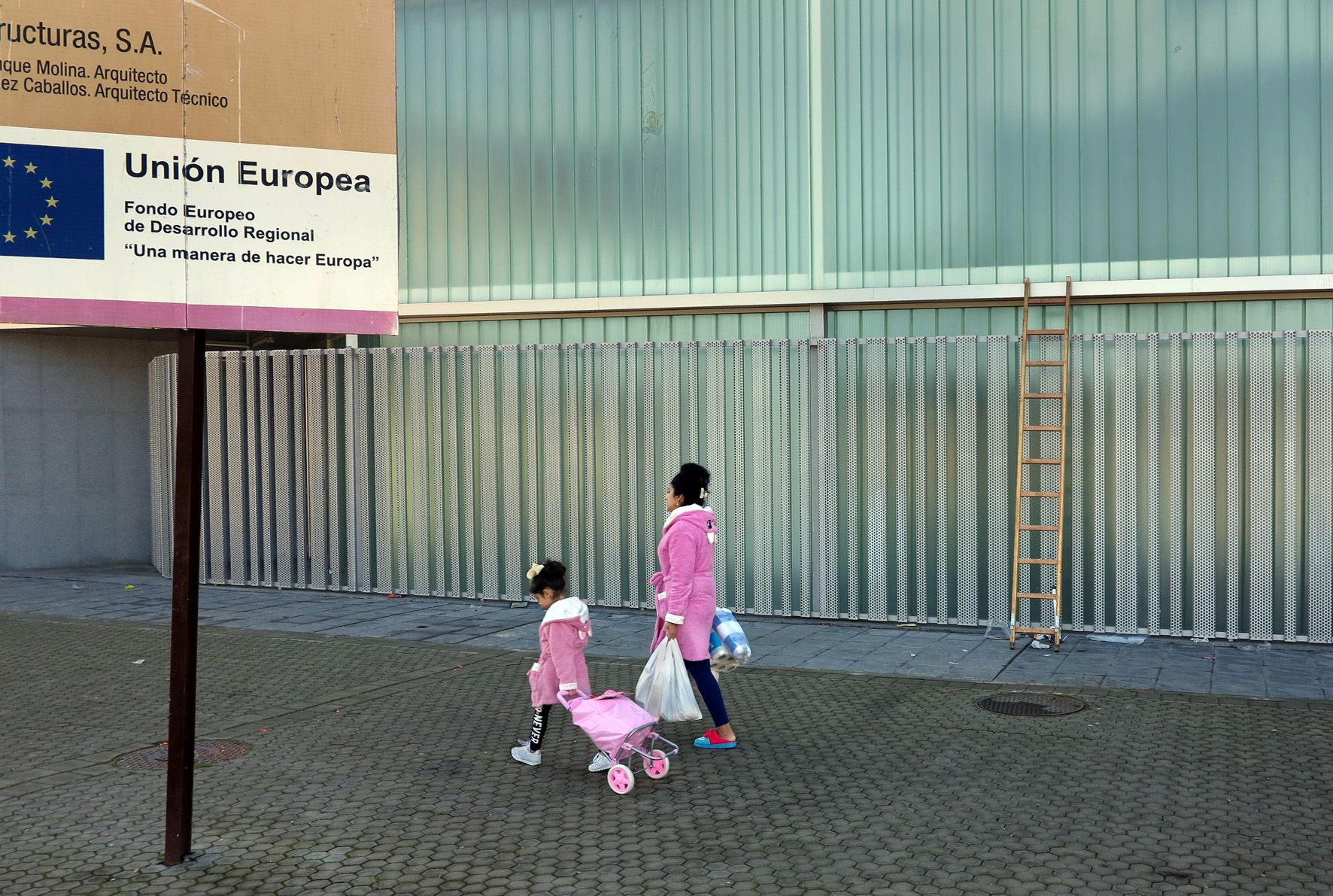
And this is where the proposal I made for RomaMoMA at Dokumenta Fifteen comes in — a proposal that, following its failure, was eventually and successfully translated into the installation Karmenstein, by Jero de los Santos and Emilia R. Peña, at the Bienal de Flamenco de Sevilla in 2022.5 I argued that recording Roma time is not merely an extractive gesture: it is an impossible attempt to seize the time of the fiesta, to enclose the ungraspable, to possess what only lives in the instant. On the one hand, this responds to a colonial, extractivist, and capitalist logic: turning Roma life into a product, a commodity, a heritage asset. But on the other hand — and here lies the productive tension — that very same act of capture can become a vehicle of Roma transmission, a technology that allows life ways to be reproduced, taught, remembered, genealogies to be reconstructed, community to be sustained.
Exactly as happens with colonial images of Roma people: the capture wounds, but re-appropriation opens up possibilities. The transformation of the colonial object into a self-represented image. The recreation of the imaginary in order to rewrite history. That is why speaking of Roma people and technology is never as simple as saying “theft” or “archive.” What is at stake is something else: the dispute over the way in which Roma time is captured — or accompanied.
One of the most complex cores of this discussion is Roma time. I do not mean this as an essentialist category, but as a temporal experience that does not coincide with modern linearity or, by extension, with the temporalities of cultural industry production. The time of the fiesta, of ritual, of cante, and of sorrow — to name a few of these Romani space-times — is not a time that can be measured in minutes. It is measured, perhaps, in intensities, in pauses, in expansions.6 When a cantaor lets a silence fall, in a particular space-time, perhaps that silence is also saying something; when a rhythmic sequence, the so-called flamenco compás, stretches beyond what is expected, what is being revealed is not technical virtuosity. It is a way of being in the world. Recording, by definition, flattens that elasticity.

The phonographic industry — from wax cylinders to Spotify, with its ties to the Israeli occupation industry in the Palestinian territories—7 operates under the fiction that time can be fixed, captured, and reduced to a stable duration. But the Roma fiesta has no “duration”; it has vital rhythm, since it responds neither to the logic of performance nor to that of the product — so that the question “how long does a martinete last?” is, in itself, already a colonial gesture. At bottom, the problem is not that recording cuts things short, but that it passes off an amputated time as canonical, manufactured for global distribution, far removed from the community that produced it.
Here another interesting contradiction emerges. Precisely because that time is irrepeatable, many Roma families wish to preserve it. That need for memory — which is not a desire for archive but a desire for continuity — collides directly with technologies built to fix and freeze. Recording barely manages to preserve a shadow of Roma time. And yet, that shadow can become a communal tool. My grandmother Manuela Carrasco Jiménez, mother of my mother Gertrudis, from Jerez de la Frontera, a Roma woman who could neither read nor write, handled VHS tapes with absolute authority, watching again and again her brother Manolito Jero dancing on television. That went well beyond media consumption: it was a way of staying alive with him, of extending his presence beyond the body.
And this forces us to rethink the initial question: what does a technology want to capture when it tries to capture Roma time? The cante? The technique? The emotion? Or the possibility of taming a time that does not belong to it? The technologies of memory reveal, without meaning to, their own limit: they always arrive late. They always come after the event. The living experience of Roma time cannot be tamed, but neither can it be entirely lost. What we find, then, is a space of tension in which Roma time becomes a philosophical, aesthetic, and political problem for modernity, one that lies beyond the opposition between “tradition” and “technology.”
It should be made clear that I am not speaking from any exoticist rhetoric of the eternal return. What matters to me is to describe the concrete cost of confronting a Roma temporality with the regime of fixed duration, rather than inscribing it within the cyclical myth.8
The taste for the Roma before flamenco
One of the most powerful — and most invisible — operations of flamenco historiography is to assume that flamenco is the origin of everything: of taste, of predilection, of the fiction of Romaniness. But if we look calmly at the longue durée, we see that the desire for the Roma, the fascination with our gestures, our bodies, our capacities for improvisation, and our forms of community, predates flamenco. Long predates it. This “taste for the Roma” already existed before the vocabulary of flamenco itself existed; it was, put plainly, a colonial, racialized, romantic, disciplinary predilection, which prepared the ground for flamenco to emerge, a century later, as its preferred aesthetic frame.
This places flamenco in a problematic position: it arises less as a Roma archive than as a trompe-l'œil, a stage set designed to organize, aestheticize, and domesticate Roma life in a modern key. What historiography calls “the birth of flamenco” — Demófilo, González Climent, Schuchardt, Mairena and Molina, Pedro Peña, Grande, Lavaur — is, in reality, the moment at which majority society decides to codify, fix, and narrate what it had been watching for centuries. It is not the beginning of our history: it is the beginning of its narrative about us.9
Here the work of my friend Meira Goldberg becomes essential; she reminds us that flamenco organizes not only the Roma but, at the same time, Blackness within Hispanic culture. What her “Sonidos negros: On the blackness of flamenco” shows with such clarity — and which so few people have read with the attention it deserves — is that flamenco functions as a colonial device of racial continuity. It fixes the Roma, Blackness, the Moorish, and the Indigenous, and offers Europe a stage on which to rehearse its own internal difference through racialization. Far from being an innocent art, it constitutes an uncomfortable space where multiple genealogies of oppression and creation intersect.10
Understanding this changes the whole framework: the predilection, the desire, and the gaze that precede flamenco are the very engine that has shaped how our history has been told. And, above all, it explains something Spanish academia rarely wants to acknowledge: flamenco, as we know it, is configured as a response of Spanish whiteness to Roma presence, rather than as an expression originating from Spanish Roma people themselves. That is why beginning with predilection — rather than with flamenco — allows us to hear, in a different way, the tension running through this whole talk: the tension between our memories and their technologies.
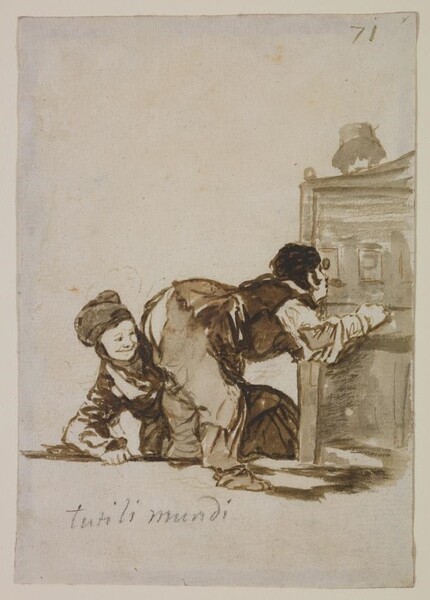
The technological contradiction
Recording technology — from the phonograph to digital archives — always arrives bearing a promise: permanence. “This will remain for the future,” they say. “This way it will not be lost.” But what these technologies produce in practice is something else: extraction, isolation, decontextualization.11 What for a Roma family is an embodied, irrepeatable event, situated within a collective rhythm — a funeral that brings together people long separated but who recognize one another with the slightest gesture; an organizing meeting, where forms of inter-familial respect negotiate with public forms of relation; a celebration after a hospital stay; a farewell as a civil rite of passage when young men left for military service — becomes, for the machine, a separable, interchangeable, exportable object.
And here lies the great contradiction: for something to become eternal within the modern archive, it must first stop being alive. It has to solidify, be cut away from the body that produced it, turned into a functional fragment for other ears, other eyes, other markets. It is the transit from life toward commodity. And that transit has historically been decided by others: producers, collectors, ethnographers, institutions, aficionados. My interest lies in describing the concrete cost of confronting a Roma temporality with the regime of fixed duration, while avoiding inscribing Roma time within the cyclical myth. It is in this way that many Roma lives — their voices, their stories, their sorrows, their laughter — have been converted into raw material for a global circulation that has little to do with their communal origin. The technological contradiction, then, overflows the aesthetic and technical dimensions to open up an eminently political question: who decides what deserves to be preserved, and how Roma memory ought to sound?
Talking with Ethel Brooks
Here the reading of my cousin Ethel Brooks, a Romani professor at Rutgers University, New Jersey, illuminates everything. When she speaks of the encampment/settlement as archive, method, and intimate form of knowing, she is offering us an epistemology that entirely overflows the logic of the modern archive.12 The settlement functions as an archive in motion: it moves with the people, with the seasons and the affects, and it finds its strength precisely in that capacity to accompany change. Its fragility is part of its meaning, since it sustains life without aspiring to remain intact. Its consistency is built in bonds, in gestures, and in the relationships that keep it alive; in this way, the past is reinterpreted, updated, and re-embodied in each generation.
Within this framework, digital technology is not the enemy, but it is a risk: it can break that delicate balance between what is alive and what is recorded, between the intimate and the public, between the situational and the eternalized. This gives rise to a question that runs through this part of the talk: can a technology respect an archive that does not want to be fixed, universal, or eternal?
If up to now we have spoken of concepts, here the talk descends into the personal. This move toward the personal responds to the fact that Roma memory is always embodied in concrete bodies, never in abstractions. Every story I bring is a sample, a gesture, a signal of that “living archive” Ethel Brooks spoke of.
The family's “archives”
I begin with my grandmother Manuela Carrasco Jiménez — who, I recall, could neither read nor write — and her almost mystical relationship with VHS tapes. That phrase of hers as the recorded images went by on the tape: “Is my brother about to come on now?” It was intuition, a way of understanding that, for her, video represented a presence. Every image brought back the beloved body and turned that domestic scene into a small technological miracle, devoid of theory, yet full of affection. It was there that I understood that images can be part of life while remaining outside the institutional archive, since that tape kept a bond with the past open and activated an affective memory — close and embodied — quite different from museographic memory.13
Then there is my uncle Salvador Rubio Carrasco, a man who stopped being a professional artist — a guitarist in the tradition of Niño Ricardo and Sabicas who took part in flamenco festivals during the 1960s and '70s — to become, without ever setting out to, a family archivist and a reference point in flamenco record collecting.14 On the first floor of his house, next to the bedrooms and surrounded by his old guitars, he keeps an archive organized in his own way, with index cards in a humanist hand, folders of press clippings from different eras, shelves packed with records in every format, all perfectly arranged according to his own criteria. It is an archive people talk about, over meals or coffee, in the kitchen downstairs. It is an archive also lived through silences. His life's testimony breaks with the idea that archiving is always an act of power. In his case, archiving is an act of care. A way of keeping our people — in a large, inclusive plural — from disappearing out of the story. A way of resisting invisibilization.
Something similar — though even more profound — happened with my aunt Manuela Vargas Flores, sister of my grandfather Juan, my father's father, who lived in Jerez. She did not have a VHS but a reel-to-reel recorder. An almost crude, heavy device, yet one that was for her a bridge between the world of the living and the world of the dead. On that tape was recorded the voice of her husband, Tío Coletas, talking and singing. And although she used to tell us, “listen, listen, how your uncle Coletas used to sing,” what she was really doing was talking with him. Every night, before falling asleep — as my sister Mónica, who slept beside her, recalls — she would tell him how we were growing up, how Lebrija was doing, how the times had changed. That machine was not an archive: it was an interlocutor. It was her way of keeping the bond alive, of continuing the conversation that life had interrupted. The relationship was so intense that once, when the tape got tangled, she nearly fell apart with grief. It was not just the tape that had come undone; it was the fragile thread that bound her to the man she had loved. Her grief, as a widow, made evident something I have since seen again and again in Roma memory: that poor technologies — a reel-to-reel recorder, a tape, a trembling voice caught in plastic — can be ethical, affective, vital devices, machines that accompany life as much as they record its traces. In Roma hands, technology does not capture; it accompanies. It does not fix; it keeps alive. It does not document; it cares. That device, entirely outside any academic or professional circuit, produced a form of listening that was not aesthetic but emotional. It sought neither sound fidelity nor documentation: it sought company.
That reel-to-reel recorder — poor, worn out — is a perfect example of an ethical technology, one placed at the service of life rather than of the archive.15
.jpg)
Other archives: anthologies, collectors, and memories that return by strange paths
When I think about the “other archives” of flamenco — the anthologies from the 1950s onward, the photographic projects, the foreign collectors — I am less interested in what they preserve than in the strangeness they introduce into the community they archive. The great early anthologies of flamenco, organized with that anthropological, classificatory gaze so typical of the twentieth century, sought to fix a repertoire, to order what they considered chaos, and to put names to what lived in people's hands and mouths. But that fixing had a side effect: it separated memory from the body that had sustained it.16
I think, for example, of Juan José Vargas Vargas “El Chozas” — my grandfather Juan Mesa's first cousin — who kept in his memory an entire legacy of corridos and romances. None of that was held in any institutional archive: it lived in him. And yet, if it had not been for that wave of recordings and for the work of people like Luis Suárez Ávila, I might never have known that treasure had existed. The institutional archive, which so often strips things bare, in this case functioned as an echo that returned to me an almost-lost memory: its resonance came not from my family but from a book, a record, an archive displaced far from the place where that memory had been born.17
With my friend Steve Kahn the story is different, but the tension is the same. An American photographer who arrived in Morón in the sixties, later moved into industrial photography, and forty years afterward reconstructed an entire archive — Flamenco Project — out of dispersed images by seventeen photographers who had portrayed families from Morón, Utrera, Lebrija, and Seville.18 My relationship with that archive is deeply ambivalent: I had to look at my own past through someone else's eyes, across a bridge that he had built. And yet that bridge works precisely because it is emotional: Kahn does not merely recover images — with them, he recovers bonds. Thanks to his work, part of our visual memory has not been lost, even as his gesture also reveals a paradox: in order to return to us, that memory first had to pass through him.
And then there is Triana Pura, the legendary '83 show directed by Gloria Moreno. A VHS recording that, through the strange twists of fate, ended up in my house thanks to my uncle Salvador. That tape was part of my sentimental education: I watched it again and again, as if it contained within it some truth about how people used to sing and dance in Triana. Thirty years later, I found myself living in Polígono Sur, the very place where many of the people who appear in that recording — including Pepa La Calzona, barely 300 meters from my house — had rebuilt their lives. The archive had shifted, and so had I. What had been for me a document of childhood became a living constellation, a way of recognizing bodies, gestures, ways of being that had traveled from Triana to the peripheral neighborhoods of Seville, just as the VHS tape had traveled all the way to my living room.19
In all these cases — the anthologies, the photographic projects, the inherited tapes — the same movement repeats itself: memory leaves the community, transforms, returns by unexpected paths, and upon returning demands a different affective ethic in order to be understood. Neither neutral preservation nor pure extraction: an emotional back-and-forth that overflows any institutional idea of archive.
From all these stories emerges a key idea running through this section: my memory passes through other bodies, other hands, other devices. Roma memory is collective, choral, and distributed — never individual. It is articulated through relations of affect, technological devices, and conditions of fragility, and for that reason it defies the logic of modern archives, oriented as they are toward completeness, total preservation, and permanence. Its main purpose is to guarantee transmission, to care for bonds, and to foster the survival of communal knowledge and practices.
The contemporary case: Polígono Sur
If I turn now to Polígono Sur, I do not do so in order to turn it into a “case study.” I approach it as a space where the tensions we have described — capture, transmission, opacity, care — remain alive, embodied in everyday practices. Polígono Sur allowed me to see something fundamental: Roma memory is threatened less by a lack of technology than by an excess of surveillance.20 Working there forced me to ask myself questions that academic research usually avoids: who is the recording for? For the university? For the cultural institution? For the archive? For the family? For what future is it being kept? For the algorithm? For a grant? So that people “get to know the neighborhood”? Or for the girls and boys who have not yet been born? And what is lost every time we press record? Sometimes, recording interrupts the intimacy of the fiesta. Sometimes it fixes a gesture that should have kept moving. Sometimes it turns a lived experience into an object.
At this point I connect with the French-Martinican philosopher and writer Édouard Glissant and his defense of the right to opacity as a form of resistance: the right not to be transparent, explainable, or exportable; not to submit to the categories of modernity in order to be able to establish just relations. This idea was articulated with great clarity by the Romani community itself in the context of RomaMoMA: “We have relied on our own archives, our own transgenerational sharing of knowledge, our own pedagogies of practice. The beauty that we share with the world, the ways that we teach, learn, and thrive, have been built by us, for each other — and, yes, for you."21
Polígono Sur teaches me that Roma transmission does not need devices, though it can make use of them so long as the community keeps control; that technology is not neutral, since it imposes a tempo that clashes with the tempo of Roma life; that communal memory does not seek to preserve everything, but rather to protect what matters. And that perhaps opacity works less as an epistemological limit than as a political strategy.
If everything so far has brought us to this point — the suspicion, the contradiction, the intimate archives, the contemporary ambivalence — it is because we need another language to speak about cultural mediation in Roma contexts. And not only Roma contexts, of course. A language set apart from the technical, the institutional, and the universalist, one that begins precisely from this question: how do you mediate something that does not want to be fixed?
Mediating is caring, not capturing
This is where my work on cultural mediation converges with these tensions. From my perspective, Roma mediation moves away from the functions of translation, representation, or intermediation with “the institutional.” Its task consists in accompanying processes of memory with attention and care, creating conditions of possibility rather than producing closed outcomes. It also involves building trust so as to allow knowledge to circulate, while respecting its potential reserve. Roma mediation is organized around extended temporalities, as opposed to the urgencies of cultural programming; it prioritizes relationships over outcomes, affective commitment over academic extractivism, and opacity over the demands of transparency. For this reason, I maintain that it should be understood as an ethics of encounter, not a technical service.22
Here I return to Glissant: the right to opacity implies being able to exist without explaining oneself, and preserving zones of reserve. In practice, this means recording only what the community decides to share, publishing with judgment, avoiding turning every instant automatically into content, and rejecting narratives of “overcoming” or “resilience” designed to satisfy the spectator. It means allowing what is Roma to breathe in its own time, away from the eye that wants to see everything and archive everything.23
From flamenco to Roma cante: a political distinction
Here I take up something central to the argument of this section: flamenco as institutional archive, an object of patrimonialization and global commodity, versus Roma cante as a living, situated, relational archive. When I speak of “Roma cante,” I am not referring to any supposed musical purity — which never existed — but to an ethical regime of circulation and listening: what is sung for a specific community and may remain outside a universal public; what is transmitted within a circle, far from market logics; what happens between bodies and relationships, rather than in front of a camera. In this sense, mediating Roma cante means sharing it when the community decides to do so, and, above all, preserving and accompanying the vital conditions that make its existence possible.24 To close is not to conclude: it is to open another question.
At this point, what emerges is not a technical conclusion but an uncomfortable realization: speaking of flamenco, of archive, and of technology demands speaking also of power and of race.
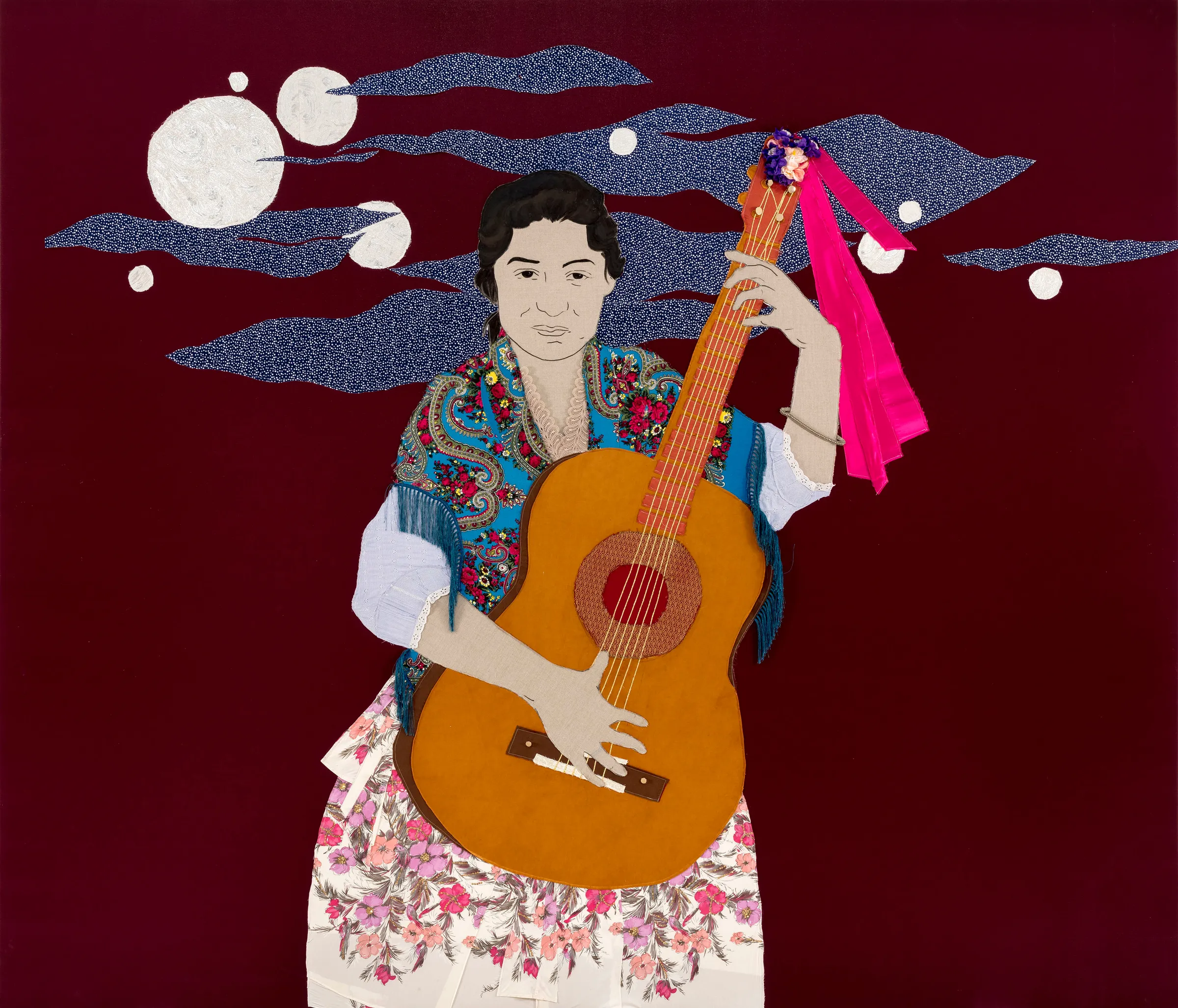
Here I draw on Fatima El-Tayeb: Europe declares itself colorblind, yet it produces race through the saturation of images, through excess of presence. Flamenco works the same way: the image of the Roma person is celebrated, their voice is consumed, their gesture is studied, their “duende” is turned into heritage. And yet, the life that sustains all of that remains invisible. It is a cruel paradox: the more visible flamenco becomes, the more opaque Roma life becomes to the dominant imaginary. That is why I say — and I say it carefully, but without fear — that flamenco produces race in Spain. It reproduces it, decorates it, aestheticizes it, normalizes it. The flamenco archive is a machinery that fixes bodies and temporalities that are, in reality, mobile, fragile, and alive.25
Against that machine, the Roma archive — the counter-archives we have named — operates according to another logic: it is transmitted through kinship and comes alive in the community, outside institutions and auditoriums. It is kept in living bodies and spaces, and it moves in a spiral time, foreign to linearity. When necessary, it can also disappear. The Roma archive retains the freedom to show itself, transform itself, or cease to exist. Its horizon is the continuity of life, rather than posterity.
The question of our time
Within this framework, the question comes down to guaranteeing Roma life in a world that wants to turn it into content: how can we use technology without losing the rhythm of relationships? How can we mediate without capturing? How can we archive without colonizing? That is, I believe, the ethical question of our time.
The right to remember is also the right to disappear; the right to leave something said and the right to leave no trace. It is a profoundly political right: the right not to be reduced to someone else's archive. And if flamenco is dying — as I believe it is dying — its agony is not explained by a lack of studies or recordings: it stems from having stopped listening to those who sustained it, and who created with their lives.
Roma memory, by contrast, remains alive, because it never depended on a machine to exist.26
Written in Polígono Sur, Seville, in December 2025, and revised, and rethought, in Lebrija in August 2026.
Works Cited/Further Reading
• 1The concept of the 'colonial library' is borrowed and transposed here from the field of African studies: Mudimbe, V. Y., The Invention of Africa: Gnosis, Philosophy, and the Order of Knowledge, Indiana University Press, 1988, p. 175, where the term designates the corpus of foundational authors whose structural authority continues to actively operate on the field long after its historical formation. I apply the same logic here to the genealogy of writing about the Roma and flamenco.
•2Goldberg, K. Meira, “Sonidos negros: On the blackness of flamenco,” in T. de Souza Pinto, A. Creas, and M. Stokes (eds.), The Oxford Handbook of Music in the Mediterranean, Oxford University Press, 2018. Charnon-Deutsch, Lou, The Spanish Gypsy: The History of a European Obsession, Penn State University Press, 2004.
•3Bouza, Fernando. Imagen y propaganda. Capítulos de historia cultural del reinado de Felipe II. Akal, 1998.
•4The primary source on the legend of Joaquín el de la Paula is José Monleón's interview with his son Enrique de la Paula, published in Lo que sabemos de flamenco, Gregorio del Toro Editor, Madrid, 1967, pp. 31-34. The legend is examined critically in Martín Martín, Manuel, “Joaquín el de la Paula: Rey de la soleá,” Revista Sevilla Flamenca, no. 25, May-June 1983, pp. 20-24, which contrasts Enrique's testimony with Hiniesta's version and Antonio Mairena's position. The legend, then, is not a closed narrative but an open critical object, always liable to revision on the basis of non-homogeneous oral testimonies.
•5On RomaMoMA at Dokumenta Fifteen, see ERIAC, “One day we shall celebrate again,”. On the Karmenstein installation, Bienal de Flamenco de Sevilla, 2022. On the formulation “campamento como archivo, método y forma íntima de saber,” see Brooks, Ethel, Encampment as Archive, as Disruption, as Future, as Love, text of the talk delivered at Campus Polígono Sur, Seville, 2021 (also available on YouTube). Juneja, Mónica, and Ziebritzki, Jo, Learning with Documenta 15: Principles, Practices, Problems, Grey Room, 2023
•6Marsh, Adrian, No Promised Land: History and historiography of the origin of the Gypsies, Interface Publications, 2008, especially section 1.4, “Gypsies, history and the problem of time.” For the contemporary dialogue, see Periáñez, Iván, Cosmosonoridades: cante-gitano y canción-gyu: Epistemologías del sentir, Akal, 2023.
•7The reference to the phonographic industry's ties with the Israeli occupation industry in the Palestinian territories is stated here as an explicit political position, not as a technical fact. See BDS Movement, “Boycott Spotify,” bdsmovement.net.
•8Eliade, Mircea, El mito del eterno retorno, Spanish translation by Ricardo Anaya, Alianza, Madrid, 2000 (edition owned by the author). This reference is introduced as a critical counterpoint, to explicitly distinguish the Romani experience of time from any essentialist inscription into an archaic myth. Original French edition: Le Mythe de l'Éternel Retour, 1949.
•9Machado y Álvarez, Antonio (“Demófilo”), Colección de cantes flamencos, 1881; González Climent, Anselmo, Flamencología, 1955; Molina, Ricardo, and Antonio Mairena, Mundo y formas del cante flamenco, Revista de Occidente, 1963; Schuchardt, Hugo, Die Cantes flamencos, 1881; Peña Fernández, Pedro, Los gitanos flamencos, Almuzara, 2013; Grande, Félix, Memoria del flamenco, Espasa-Calpe, 1979 (2 vols.); Lavaur, Luis, Teoría romántica del cante flamenco, Editora Nacional, 1976.
•10Goldberg, K. Meira, “Sonidos negros: On the blackness of flamenco,” in T. de Souza Pinto, A. Creas, and M. Stokes (eds.), The Oxford Handbook of Music in the Mediterranean, Oxford University Press, 2018. Charnon-Deutsch, Lou, The Spanish Gypsy: The History of a European Obsession, Penn State University Press, 2004.
•11Osuna, Javier, “Los fardos de Pericón,” an entry on the early history of the phonograph in flamenco.
•12On RomaMoMA at Documenta Fifteen, see ERIAC, “One day we shall celebrate again,”. On the Karmenstein installation, Bienal de Flamenco de Sevilla, 2022. On the formulation “campamento como archivo, método y forma íntima de saber,” see Brooks, Ethel, Encampment as Archive, as Disruption, as Future, as Love, text of the talk delivered at Campus Polígono Sur, Seville, 2021 (also available on YouTube). Juneja, Mónica, and Ziebritzki, Jo, Learning with Documenta 15: Principles, Practices, Problems, Grey Room, 2023
•13These scenes come from family memory; no external bibliographic references exist.
•14These scenes come from family memory; no external bibliographic references exist.
•15Municipal census of Jerez, registration as of December 31, 1935 (Municipal District no. 4, Santiago neighborhood, sheet no. 1,668): Sebastián Carrasco Vargas (Jerez, October 21, 1909; municipal guard; literate) and Manuela Vargas Flores (Lebrija, Seville, February 2, 1914; married; illiterate).
•16Magna Antología del Cante Flamenco, directed by José Blas Vega (1942-2012), legal deposit 1982, featuring Juan José Vargas Vargas “El Chozas.”
•17Suárez Ávila, Luis, “La fiesta del cante de Los Puertos,” Diario de Cádiz, November 25, 2014. Authorial testimony: Suárez Ávila states that he personally conceived and organized all four editions of the Fiesta del Cante de los Puertos, with the aim of documenting cantes at risk of disappearing.
•18Kahn, Steve, Flamenco Project: una ventana a la visión extranjera (1960-1985), Cajasol, Seville, 2010. ISBN: 978-84-92704-24-8.
•19 Canal Sur, Triana Pura, On Gloria Moreno's initiative and Ricardo Pachón's stage direction of Triana Pura, no academic research has yet been published. On the institutional context, see Cid Pérez, Manuel, Las políticas culturales del Ayuntamiento de Sevilla: 1979-1983. El gobierno de la concordia, Ediciones Alfar, 2021, on José Luis Ortiz Nuevo as Culture delegate of Seville's first democratic municipal government and later creator of the Bienal de Flamenco.
•20Junta de Andalucía, Plan Integral del Polígono Sur, 2003 ed. and later updates.
•21Brooks, Ethel, RomaMoMA Manifesto, op. cit.; Glissant, Édouard, Poétique de la Relation, Gallimard, 1990; Spanish translation: Poética de la Relación, Ediciones de la Flor, Buenos Aires, 2010.
•22For the classic framework of cultural mediation in its French key, see Chaumier, Serge, and Mairesse, François, La médiation culturelle, Paris, Armand Colin, 2013; and Bordeaux, Marie-Christine, “La médiation culturelle dans les arts de la scène: avancées et résistances,” in Fanny Serain, François Vaisse, Patrice Chazottes, Elisabeth Caillet (eds.), La médiation culturelle, cinquième roue du carrosse?, Paris, L'Harmattan, 2016, pp. 131-138. The operative definition articulated here differs from theirs at its core: where those authors understand mediation as translation between the work and the public, here it is understood as tending to the conditions under which a community's knowledge may decide to move — or not — into shared circulation.
•23Glissant, Édouard, Poética de la Relación, op. cit. The formulation “the right to exist without explaining oneself” reworks the Glissantian principle of opacity as a productive strategy, not merely as resistance to transparency.
•24Mairena, Antonio, and Molina, Ricardo, Mundo y formas del cante flamenco, Revista de Occidente, Madrid, 1963; Peña Fernández, Pedro, Los gitanos flamencos, Almuzara, Córdoba, 2013; Vargas Rubio, M. Á., “Urban Memories and Rural Mirrors: Toward a History of Romani Performing Arts,” in Goldberg, K. Meira, and Pizà, Antoni (eds.), Celebrating Flamenco's Tangled Roots: The Body Questions, Cambridge Scholars Publishing, 2022, pp. 314-320.
•25El-Tayeb, Fatima, European Others: Queering Ethnicity in Postnational Europe, University of Minnesota Press, 2011. The book problematizes the category of race in the European context and addresses, among other cases, that of the Sinti and Roma. Its reading of the Romani world connects notably with the lives of migrants and Afro-Germans, but it remains Eurocentric: it still lacks the specific work on the Spanish Romani reality, with its own public dimensions. Her work will be more decisive once it can take on that concrete history. See also Robinson, Cedric J., Black Marxism: The Making of the Black Radical Tradition, Zed Books, 1983 / University of North Carolina Press, 2000. The notion of racial capitalism that Robinson articulates is central to thinking of the flamenco archive as a racial machine: flamenco does not merely reflect racial difference within Europe, it participates in producing it.
•26The slogan “Flamenco is not a crime”: Los Voluble, a collective of digital flamenco creators, The formulation of the right to remember as a right to disappear echoes a productivist reading of Glissantian opacity, without claiming to be the author's literal formulation: it is my own reworking of the category. Additional work linked in the author's library: Martín Martín, Manuel, “Joaquín el de la Paula: Rey de la soleá,” Revista Sevilla Flamenca, no. 25, May-June 1983, pp. 20-24 (digitized by the Junta de Andalucía in 2006) — a complementary reference used critically for note 4 (the legend of Joaquín el de la Paula).
COVER IMAGE: Jero de los Santos, fotograma de Karmenstein, 2023. Vídeo, 10 min 20 s. Obra realizada con Emilia Peña y Ernesto Rosa, en colaboración con Factoría Cultural, La Digitalizadora de la Memoria Colectiva, la Bienal de Flamenco de Sevilla y la familia de Vicenta Bejarano García..




.png)
.png)
SUPPORT
Ignite the transformative power of flamenco for all.
Your tax deductible donation goes directly to artists and programs. We can't do it alone. Your support makes all the difference!

