Enamorada: flamenco and living with cancer
La Chana sits in her chair, all eyes on her as she creates a storm of delicate taconeo.
I watch, transfixed, from my living room sofa in Madison, Wisconsin.
My relationship to flamenco is something I've often used to measure my relationship to life itself–how deeply I can access joy, love, passion, fear–all of these things show up in surprisingly measurable ways, like how many minutes I've spent listening to flamenco that month or how many classes I've attended.
And during one of my darkest seasons, it became a lifeline–a way to connect to an alternate reality where I never got sick, where I stayed, year after year, in the pueblo that had become so much a part of my identity that I carried its accent with me, my arcense self feeling more complete than the Milwaukee-born girl I grew up as.
What was a quick, late night search for a flamenco show nearby (a desperate attempt to quell my Arcos homesickness) turned into elation to find out that not only was there a show coming up at a local cafe soon–but there was an actual flamenco teacher in my town offering classes that were starting soon.
I could continue to dance flamenco. I could, from this snowy, icy place, hold onto a part of the full, whole emotions I discovered while living in Cádiz.
The plan was never to leave.
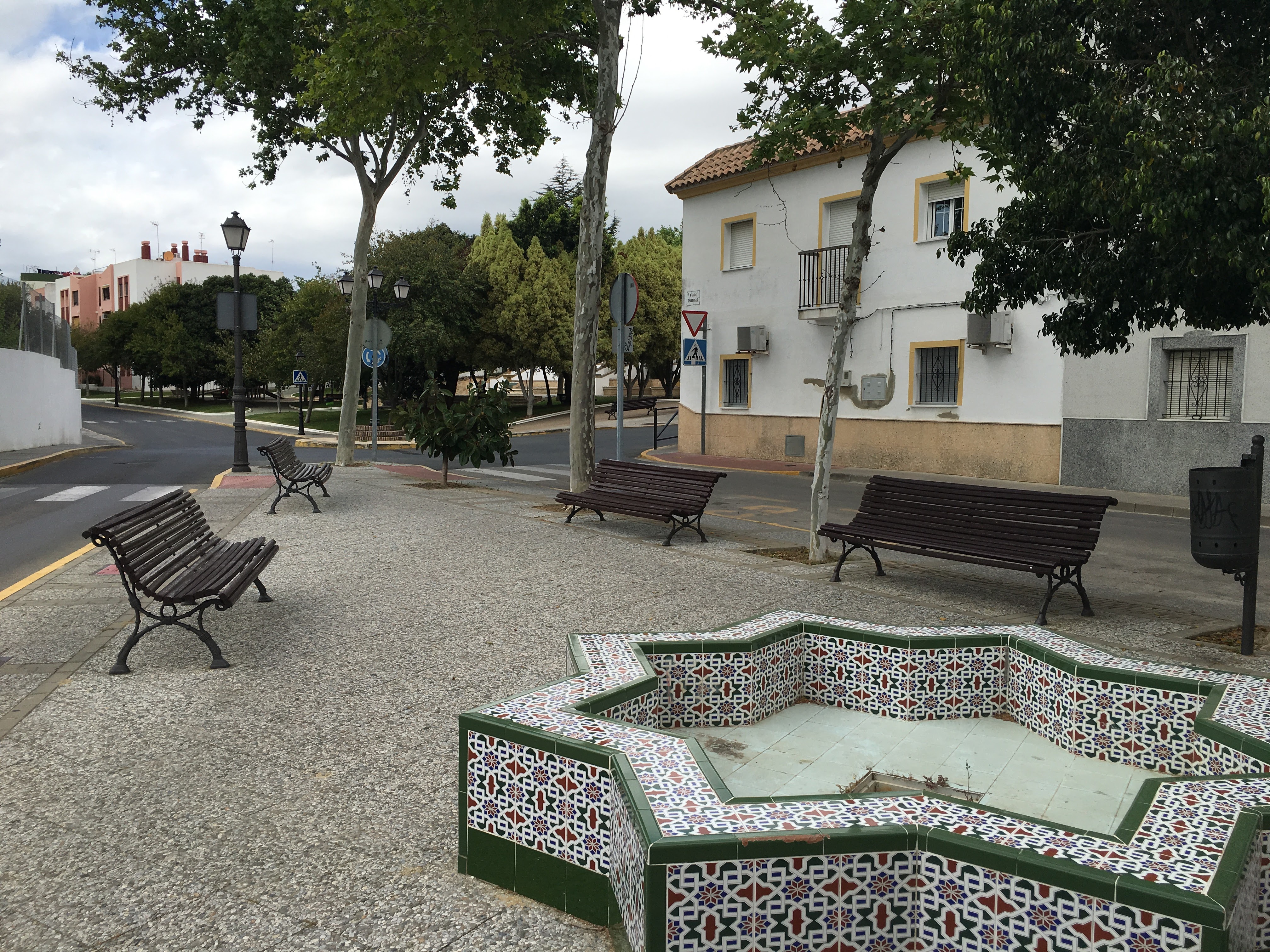
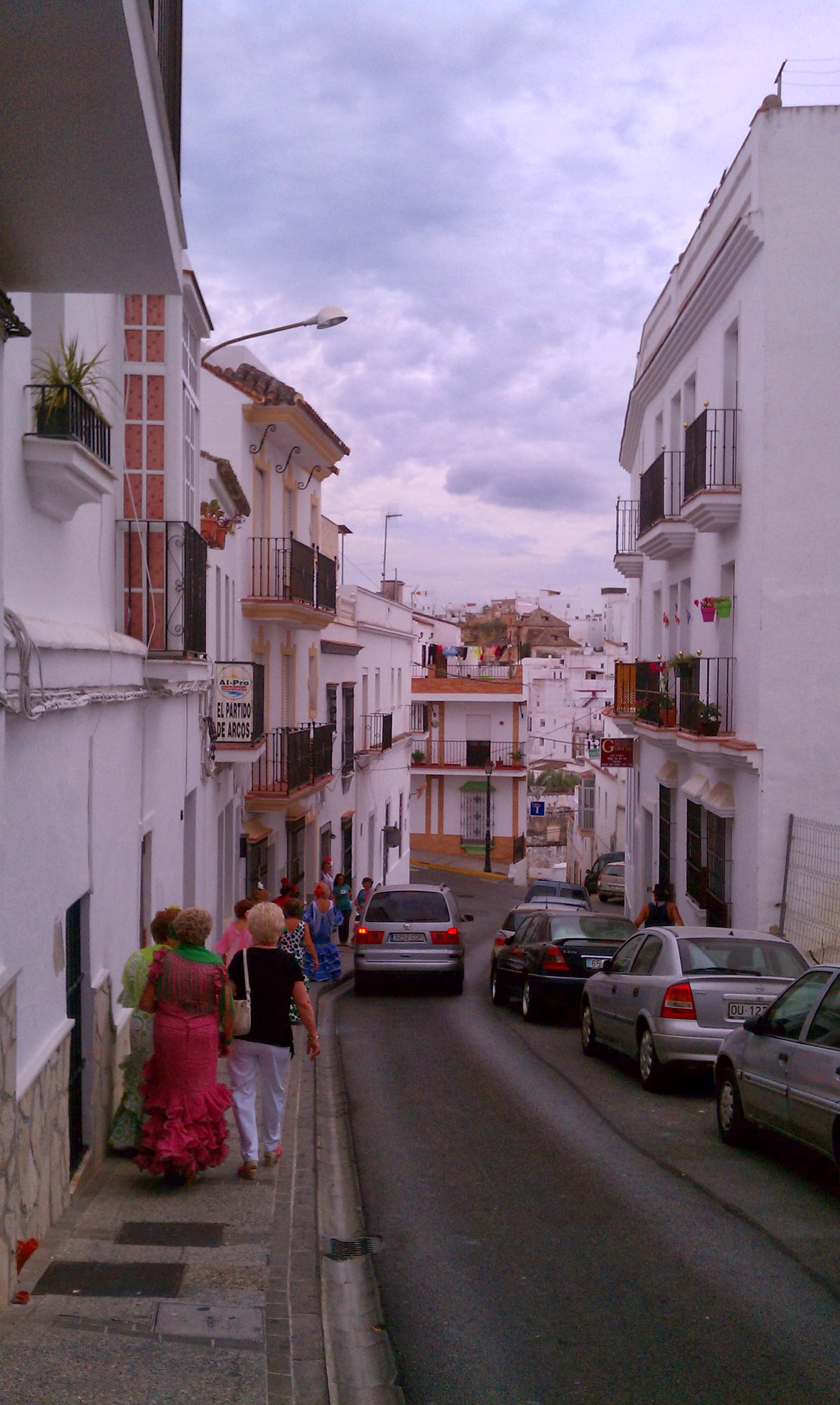
At 22 years old, I took a year after university to teach English, signing up for the Spanish government's Auxiliares de conversación program. Having studied abroad in Granada, I selected Andalucía as my preference, and was assigned a dot on the map I had never heard of: Arcos de la Frontera.
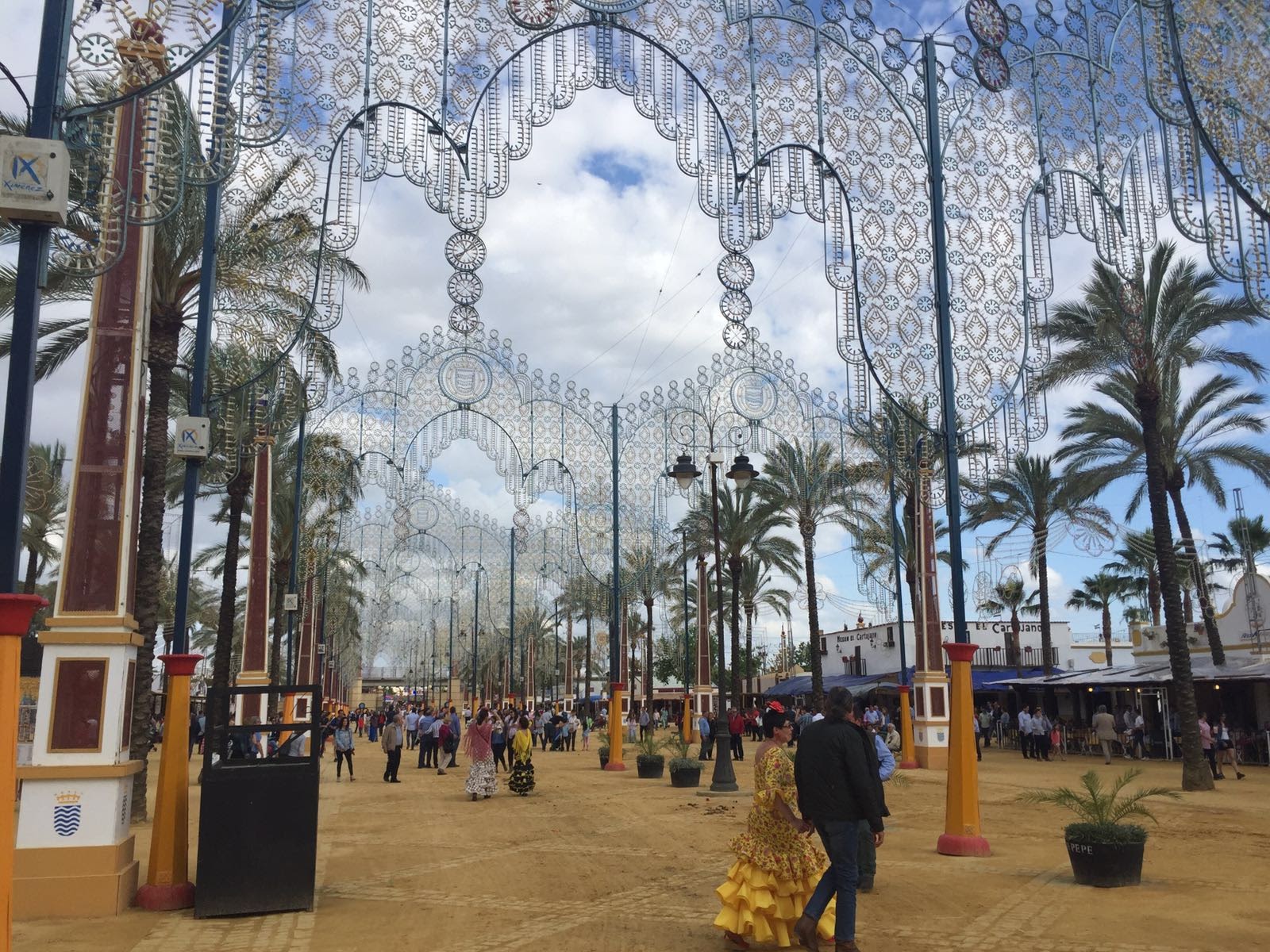
Whirlwind doesn't begin to describe the year I had. Arriving on the first day of feria with no apartment, no bank account, no cell phone, and no way of really actually getting something to eat without attending feria, basic survival instincts drove me to a plate of tortilla and aceitunas, surrounded by women in flowing, polka dotted dresses drinking rebujito.
The accent was like nothing I had ever heard while living in Granada or studying for my Spanish degree. I was hot, tired, hungry, and thrown into la cuna del flamenco. And I dove in entirely.
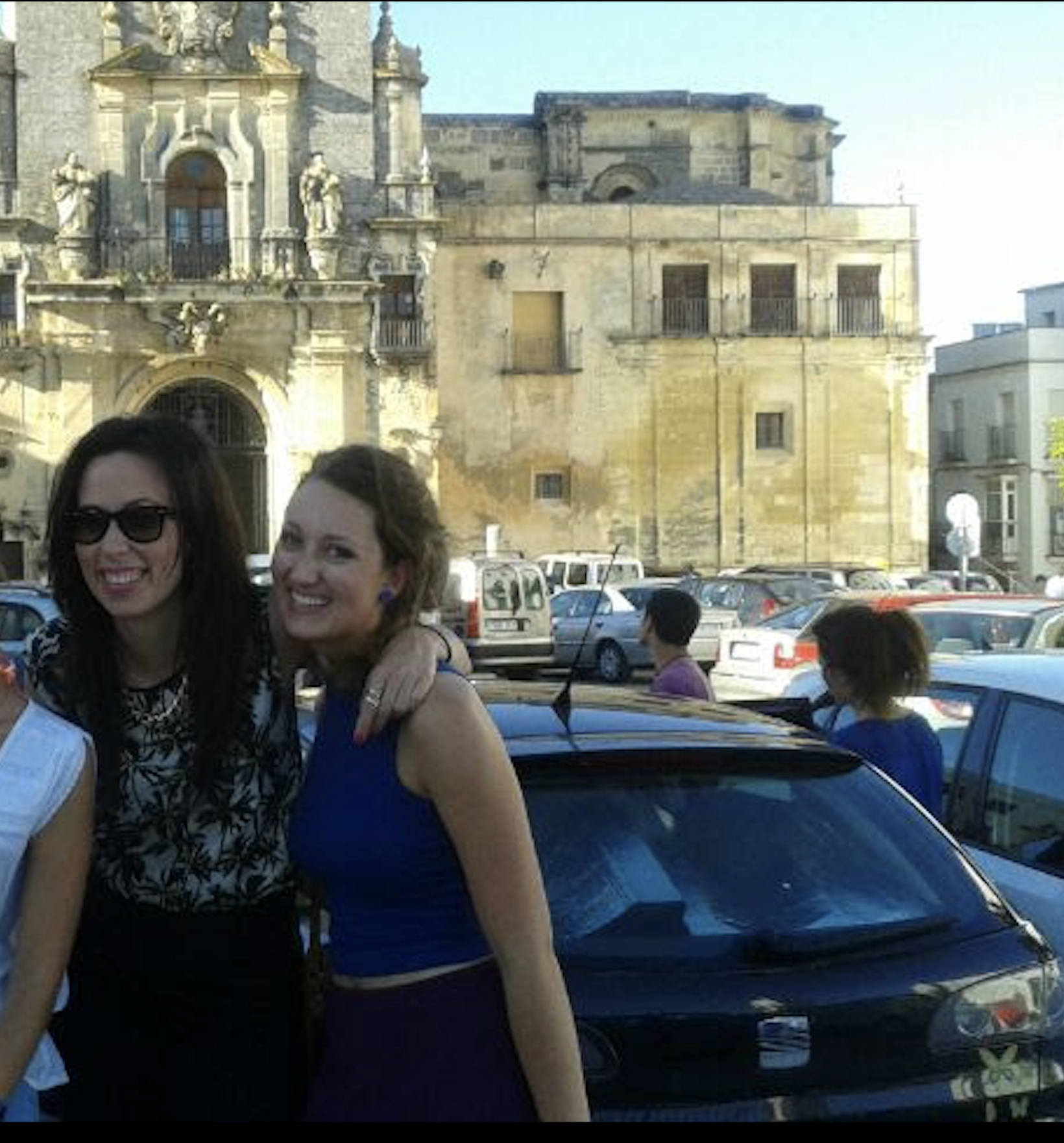
A year of some of the most meaningful friendships I've ever had, and probably too much sherry and queso payoyo later, the plan was to stay. I had even started taking flamenco classes with my colleague after work, elated to be back into dance after years away from doing ballet in high school. I applied to renew my visa, crossing my fingers to get assigned somewhere close by the next year.
I finished the year at the Feria de Jerez, trying my best at sevillanas and feeling truly like one of the luckiest people in the world.
Six months later, sitting in my childhood doctor's office, I was told I had cancer.
Flamenco as a lifeline.
I'm watching una bulería at a bar in downtown Madison, of all places. I can't believe it.
The dancer is doing palmas just like I remember.
After months of doctor appointments and begrudgingly sewing together a life in my old university town, I set out on an icy, December night, not quite believing I was seeing flamenco again in this world, that it continued to exist in the new universe, the new timeline I was placed in.
I signed up for classes in January.
What followed was years of after-work classes, close friendships, student performances at a local senior center, and practicing sevillanas in my apartment.
I built a life where doctor appointments, work, treatment, and flamenco all intertwined, a balance that kept me grounded, tethered to a more complete version of myself.
A way to release the anger, stress, and helplessness of losing autonomy in my body–the tabla de pies at the beginning of class a catharsis, the braceo and beautiful guitar that followed a reconnect to a distant beauty that felt forgotten in the whitewashed halls of my cancer center that smelled of rubbing alcohol.
Memorizing choreography and letra became a way I lived the energy, love, passion, I discovered in Cádiz, and rehearsing footwork at the snow covered bus stop or listening to flamenco while running errands were all integral ways of staying alive.
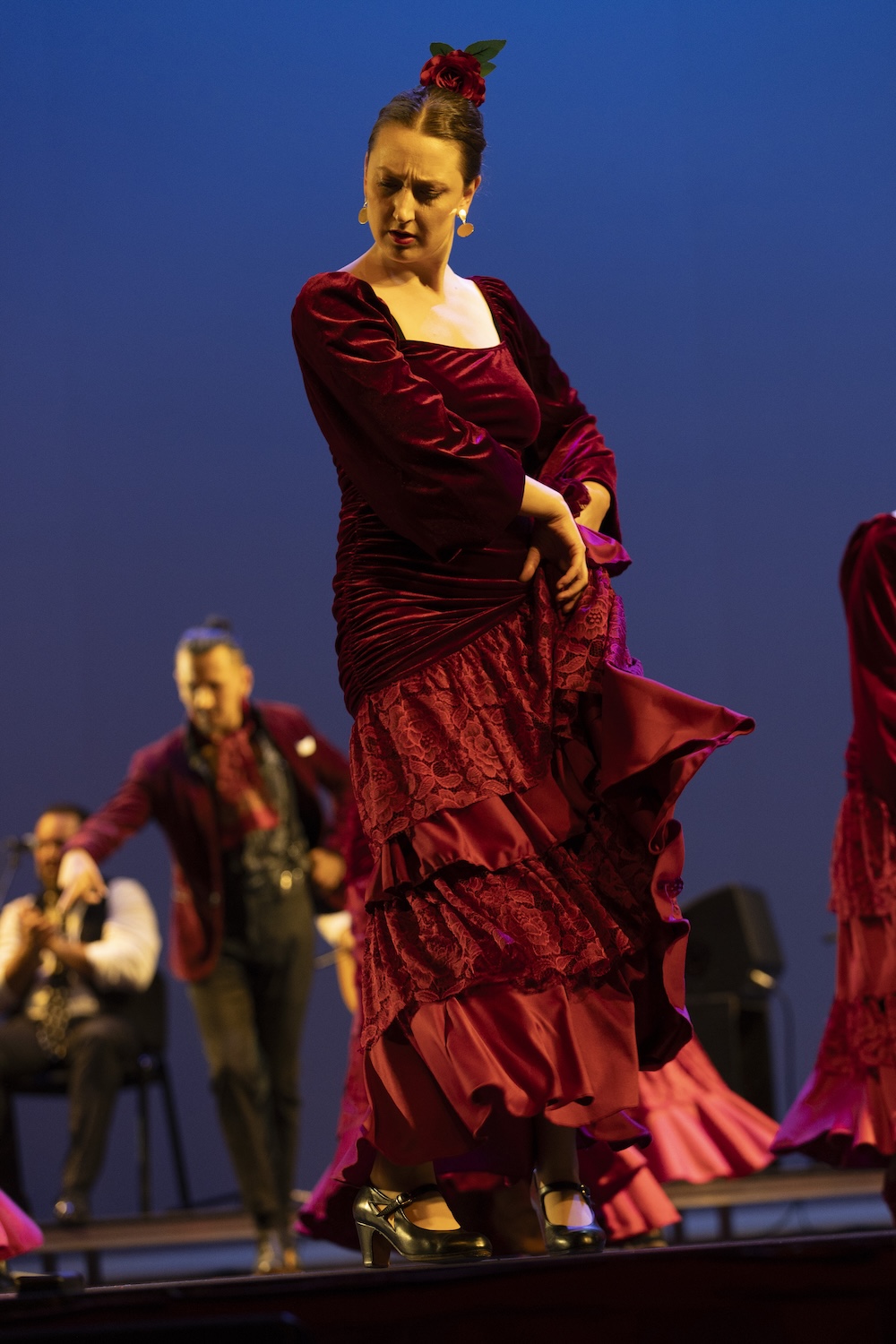
I danced through my first round of treatment, strong and at peace with my changing body–through weight gain and bulging lymph nodes, I was always a flamenca.
But my second round of treatment a few years later knocked me out completely, making me unable to dance.
La Chana
I had just won a scholarship when I had my cancer relapse.
It was an opportunity to dance at a small show in a local cafe–with a live guitarist!–and even have my first solo.
This time around, my body wasn't strong, though. The lymphoma had traveled to my throat, partially blocking my airway, making it impossible for me to do even simple household chores without losing my breath. Between treatment and surgery, I stopped going to class, and watched from a distance as my friends performed in the cafe show I was meant to be part of that year.
On one particularly dark day, I remembered la Chana.
I had seen her 2017 documentary the year before. And one scene in particular flashed through my mind.
In the documentary, La Chana, a force of pure power and passion, takes the stage for her first and last performance in 30 years–and she's seated. Due to injury, she's no longer able to dance standing, or deliver the same kind of performance from 30 years prior.
And she's more flamenca than ever.
Her face, her arms, the way she's completely locked into the compás–I could do that, I thought. I could come to class, and I could sit, and I could still do footwork.
And so I did.
Enamorada
Regaining my strength took all year, but I was able to alternate between standing and sitting, and soon dancing while standing again, albeit exhausted.
I brought electrolyte drinks, snacks, whatever it took to get through class, often unsure if I was going to be able to make the fifteen minute walk home afterward, the icy cold Wisconsin breeze a godsend.
But the alegría, the pure love and connection of being back to flamenco was more powerful than any exhaustion I felt.
And the following fall, I performed the solo I missed. And I performed bulerías, even having my own time to shine in the fin de fiesta. And I performed fandangos with my friends.
And in the crowd at the cafe, a local artist came and approached us, asking if we'd take part in her new flamenco painting series.
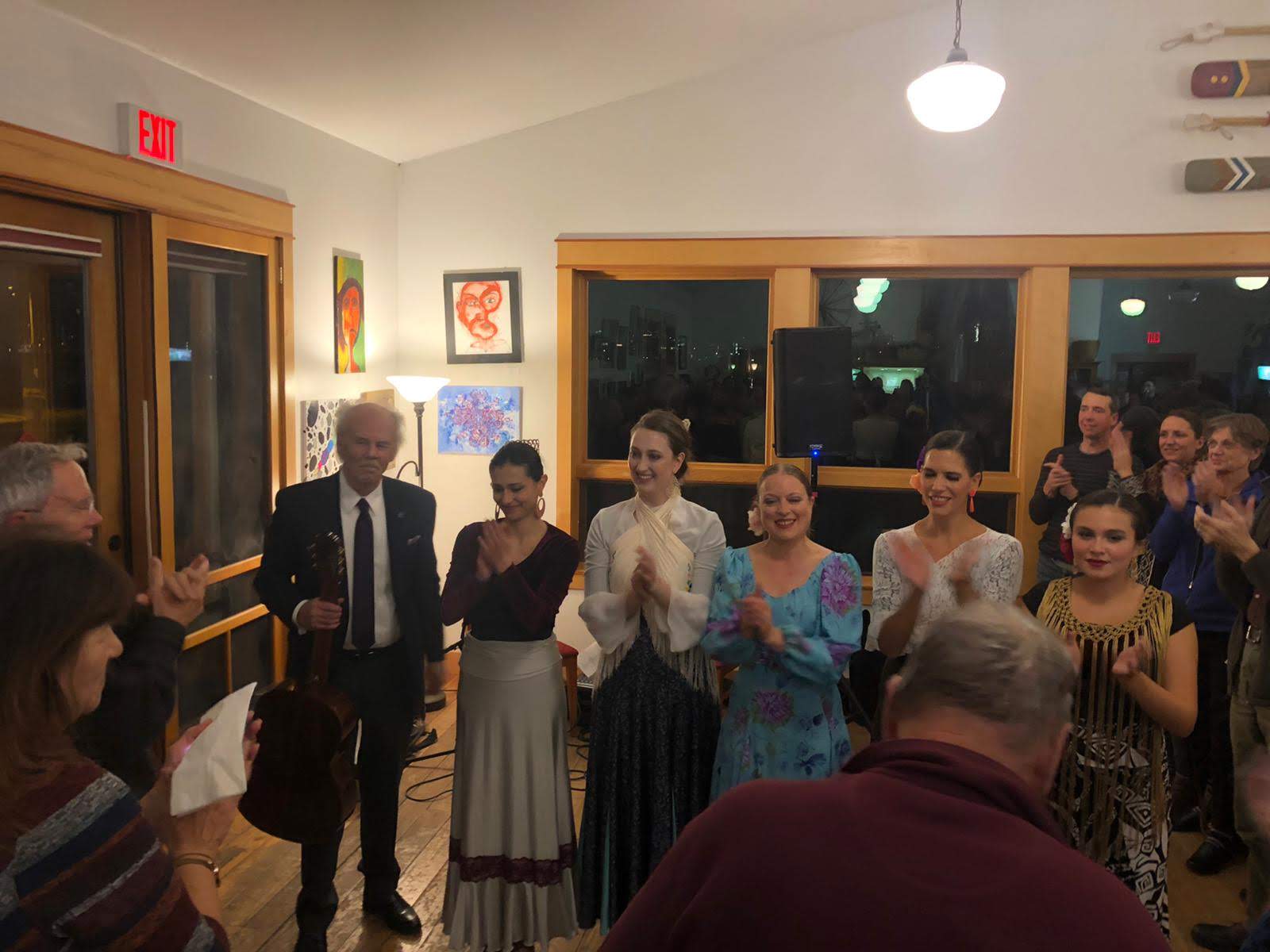
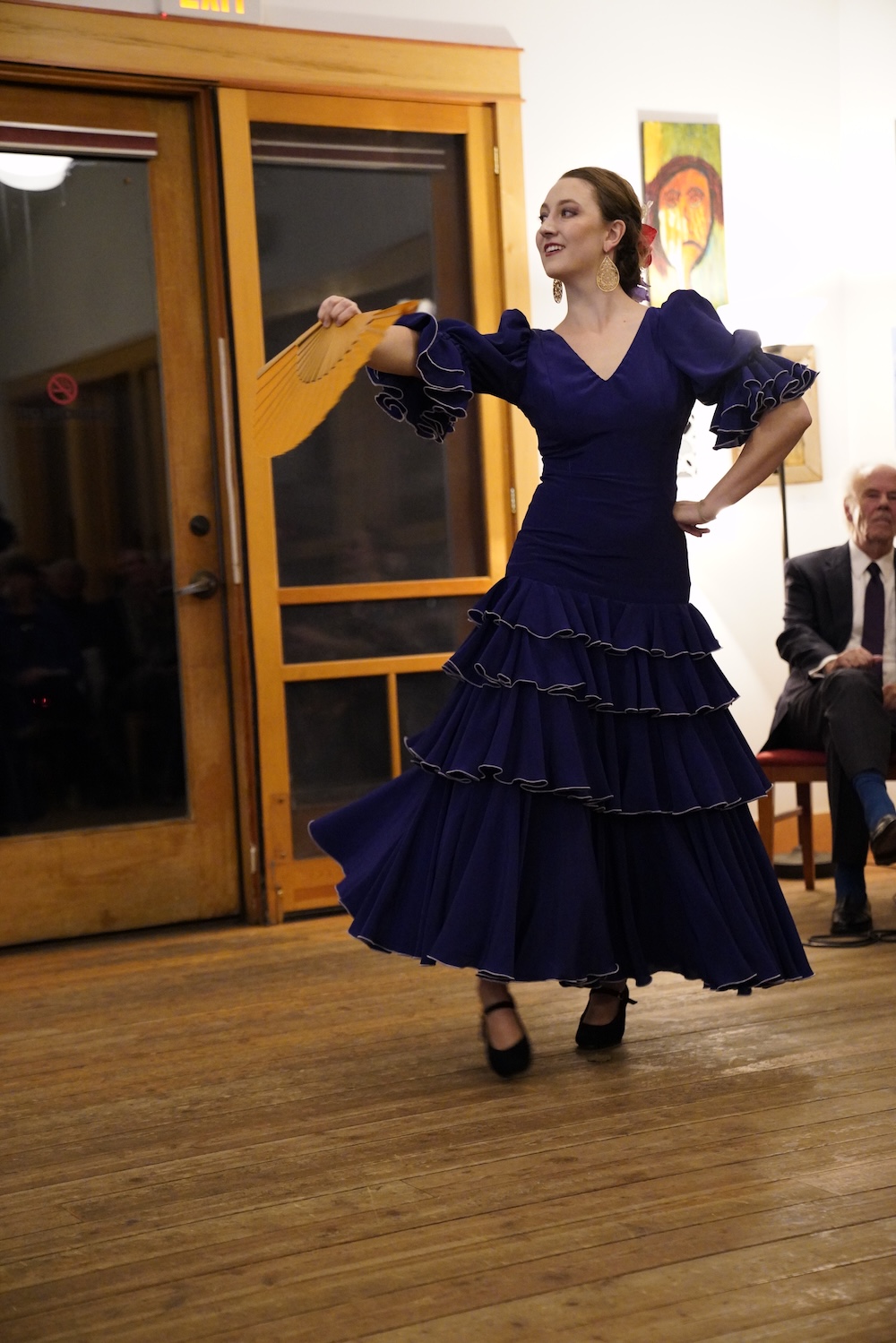
Months later, I held a print of the painting in my hands: "Enamorada".
I was a flamenca. And someone else, someone outside of my other flamenca friends, saw it, too.
But it wasn't just because I could dance again. It wasn't just because the physical strength came back to my body, or that I never lost my hair.
I was a flamenca because I lived it.
I live flamenco even when my body fails, even when my energy levels are low, even when I'm injured. Flamenco carries me in energy, attitude, spirit, in my grief and celebration, in my rage, in my joy, in my silliness, in everything I could ever imagine feeling.
No perfect level of dance is needed. No graduation into an official title or credential.
I am a flamenca because I breathe it. Because thirteen years ago, I found out about a dot on the map named Arcos de la Frontera, and I had the pure luck of being invited to a class after work, and it's kept me alive ever since.
Works Cited/Further Reading
Special thanks to: Tania Tandias Flamenco in Madison, Wisconsin. My favorite flamencas: Tessa and Sonia, the UW Carbone Cancer Center, Gilda's Club Madison, and First Descents for giving me my body back, Artist Daniella Willet-Rabin (go support her!), to Patri for inviting me to that first class, and to Danica Sena for dancing at that bar in Madison that one night back in 2014.

.png)
.png)
SUPPORT
Ignite the transformative power of flamenco for all.
Your tax deductible donation goes directly to artists and programs. We can't do it alone. Your support makes all the difference!

