The poet García Lorca: the evolution of flamenco with a unique perspective
.png)
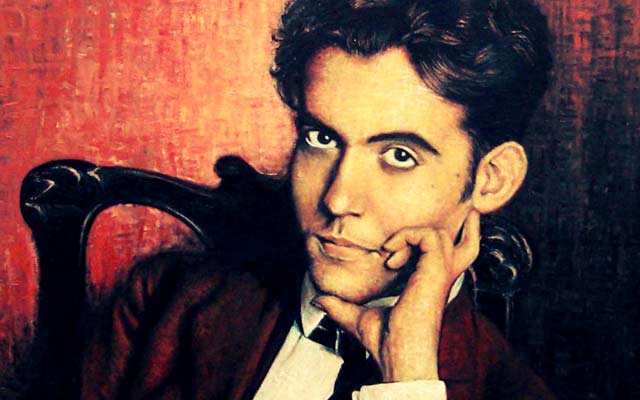
The path of Federico García: art and poetry in his soul
Born in 1898 in Fuente Vaqueros in the province of Granada (Andalusia), Federico García Lorca (1898-1936) was always an artist, a lyric musician, pianist, and writer, blending the arts together. In his province of Granada, the flamenco style of the zambra, of Gypsy origin, and the granaínas, free-flowing and emotive, without a fixed rhythm, took root.
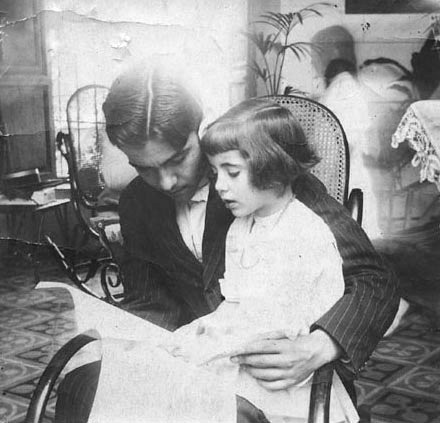
His poetry collection "Romancero Gitano" was his first work and his greatest success, although it led to the loss of friendships, especially with Dalí and Buñuel, whom he met at the Residencia de Estudiantes in Madrid in 1919. This institution was a training ground for avant-garde artists. What stands out in his career is that he fulfilled his father's expectation: to graduate with a law degree and then embark on the artistic career he had decided upon in his childhood. Passionate about the arts, particularly writing, and about flamenco culture in Granada, the poet conveyed the feelings and sensations of this culture through its various styles: love and universal sensuality in all its forms.
Through his style, his social standing and his place in Andalusian flamenco are evident. According to composer Vicente Pradal, “My great-grandfather was Federico García Lorca’s primary school teacher, teaching him his first words. It is said that he was the one who taught him to write.” Pradal states that “the problems Lorca addresses are universal problems.” Lorca’s Andalusian soul, both by heart and birth, is above all innovative, blending music with theater and poetry. Thanks to this fusion, his collective memory and reinterpretation in flamenco remain universal. His soul is distinguished by the musicality and graceful flow of his words.
Lorca's perspective on duende
“Despite all the connections Lorca has with flamenco, there will be a culture that approaches populism, the more emotional side.” -Federico García Lorca
In 1922, Federico García Lorca organized the Concurso de Cante Jondo de Granada, which allowed him, along with Manuel de Falla, to recover Cante Jondo as a way of vindicating that traditional and purely Andalusian art.In his famous lecture “Theory and Play of Duende,” delivered in Buenos Aires in 1933, he defined Duende with a series of characteristics, distinguishing it from the muse and the angel. From his own perspective, Duende, traditionally associated with flamenco culture and cante jondo, transcends this, becoming “a universal artistic concept.”

With its poetic nature, straying from the path, for Lorca, duende resides within the artist, awakening the soul's wholeness. Duende is not merely a characteristic or another intangible concept, but a process of empowering the individual's artistic potential. It brings to light the undeniable force and transformative power of flamenco, striving for perfection in artistic practice. Duende stands out as an inner perception connected to the culture of freedom of expression, particularly within Spanish and Andalusian culture. Duende plays a significant role in music, dance, and spoken or recited poetry. Thus, duende manifests itself in extreme ways through three types of passions: death, sorrow, and/or love, sometimes combining, for example, death and sorrow.
.png)
A unique perspective on the social construction of flamenco
Lorca's writings reflect unconditional life lessons and universal challenges. His first success was Romancero Gitano in 1927: his first literary work specifically linked to flamenco. His fame led to a falling out with Dalí and Buñuel, surrounding the short film "Un Chien Andalou," which he interpreted as a form of attack and insult.
In 1929, at the age of 32, he went through an existential crisis, particularly after losing his two close friends, Dalí and Buñuel, over "Un Chien Andalou" (An Andalusian Dog). They had a critical perspective on the unique style of his work "Romancero Gitano" (Gypsy Ballads, 1924-1927), describing it in both letters as "sold out to the worst kind of decay" because Lorca strayed from the beaten path and established norms. This break in contact indirectly presented an opportunity for personal and professional development, as he followed the course of his career by going to New York with his mentor, Fernando de los Ríos.
As a pioneer and innovator through his works, particularly the groundbreaking "Romancero Gitano," Federico García Lorca transformed flamenco into a haven of free expression, reflecting themes such as the marginalization of the Roma people, homosexuality, and the female condition. He remains a figure of collective and popular memory in Spanish-language literature and among flamenco aficionados.
What makes the Romancero Gitano a unique creation is its symbolism, bridging the immaterial, such as colors, with human concepts. An intrinsic relationship has been forged with the elements of nature that surround us. By titling his masterpiece "Gypsy Ballads," the word "Gypsy" reflects the poetry of the ancient Gypsy people and the origins of Andalusia. It alludes to a reclamation of Andalusian identity: its music, its traditions, its stories, its legends. The Gypsy serves as an allegory for freedom and for the passionate life oppressed and marginalized. He represents ancient Andalusia, conveying its emotional essence. The remarkable aspect of his work, which is implemented in flamenco culture, is the all-or-nothing dimension, the ever-present emotion that resonates deep within us, in the most hidden recesses of our inner being. Thus, the lament remains very much present here, as in flamenco culture: the best way for the lyric poet to represent the depth of emotional baggage, particularly the omnipresent death as a melodrama of flamenco. The extreme and intense personification gives readers space to assimilate all that has been experienced. Below are two examples of poems.
The first poem, “Romance de la luna, luna” (Ballad of the Moon, Moon), is the most emotionally representative of his masterpiece, narrating the death of a Gypsy child cradled in the loving arms of a dancing “moon” in harmony with the elements of nature. It closes with the cries and laments of his Gypsy family: “Through the olive grove they came, bronze and dream, the Gypsies. Inside the forge they weep, crying out, the Gypsies.”
In the third poem, “Reyerta” (Brawl), Federico García Lorca depicts a struggle between two Gypsy families as if it were a medieval battle between tribes. It is the only way for written poetry to portray such an intense fight.
As an avant-garde artist, Lorca reflects the context of that time and highlights what flamenco itself expresses and emphasizes in the staging, particularly with Spanish, Andalusian, and especially Granadan culture.
Through powerful themes in his poetry collection "Romancero Gitano"—tragedy, tragic death, lack of freedom, and even a sense of oppression—Federico García Lorca manages to convey universal values reflected in both flamenco and everyday life, leading us to appreciate flamenco unconditionally, breaking down all barriers and borders. Beyond the folkloric, the traditional, and the normalized aspects of Andalusia, Lorca takes us to other realms: his universe of symbols, with its human struggles between marginalization and the oppressed, a struggle that has persisted for centuries.
%20(2).png)
Works Cited/Further Reading
Primer romancero gitano : 1924 1927 por Federico García Lorca
- Autor: García Lorca, Federico (1898-1936)
- Fecha: 1928
- Datos de edición: Madrid, Revista de Occidente
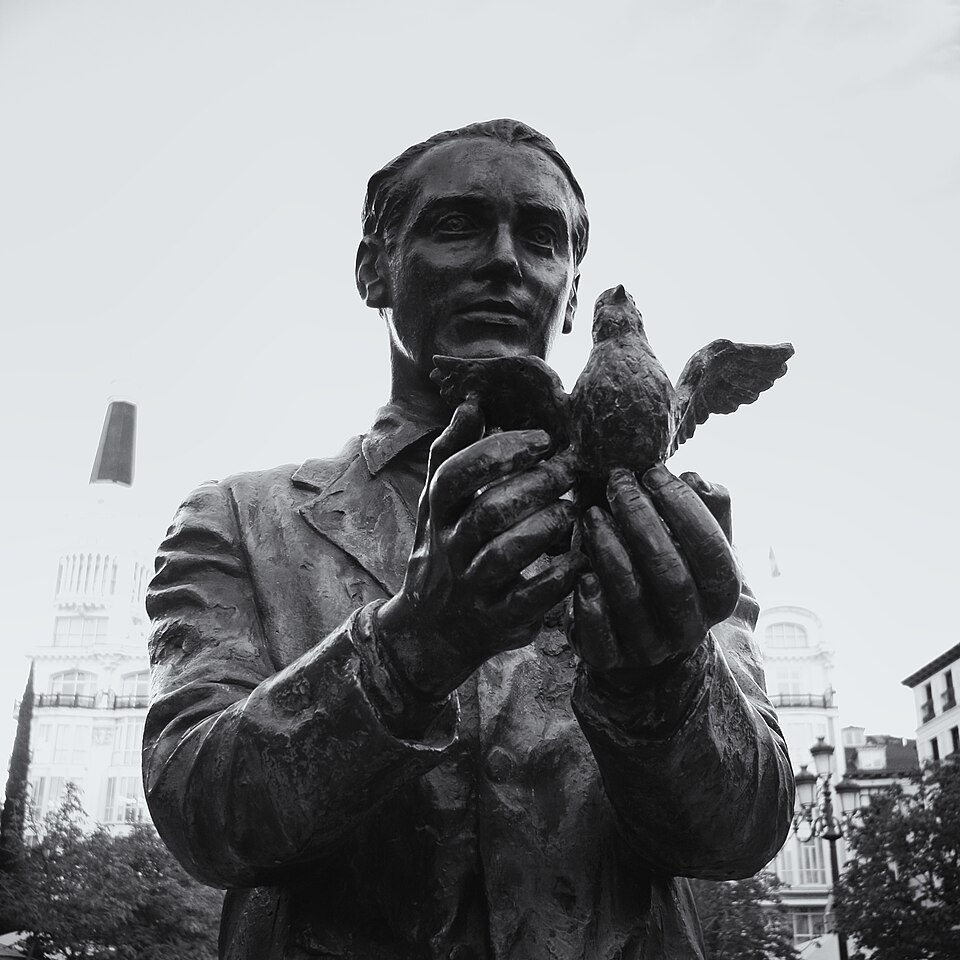
IMAGE 5: File:Monument to Federico Garcia Lorca - Madrid 01.jpg - Wikimedia Commons
Monumento a Federico García Lorca, Plaza de Santa Ana, Madrid (España), 2023.
Fotógrafo : Javier Pérez Montes.
WORKS CITED
- Romancero Gitano (1924-1927), Federico García Lorca (1898-1936). https://www.profedelengua.es/Federico_Garcia_Lorca_-_Romancero_Gitano.pdf *
- Federico García Lorca, Romancero gitano (libro completo), 2018. Voz de Tomás Galindo. Federico García Lorca - Romancero gitano -libro completo-
- Federico García Lorca– Poeta en Granada (Documental, ECLAIR BRUT, 2016), Federico García LORCA – Poète à Grenade (DOCUMENTAIRE, 2016)
- El Romancero gitano, de Federico García Lorca, Asun Martin, 2019 El Romancero gitano, de Federico García Lorca
- Lorca y el Flamenco. Romancero gitano. Laura Martin feat. @lapetitelaura_. 2020
LORCA y el FLAMENCO. Romancero gitano. feat. @lapetitelaura_
- Teoría y juego del duende de Federico García Lorca - Generación del 27 (4ª parte), Kazu Suwa | Guitarra Clásica. Teoría y juego del duende de Federico García Lorca - Generación del 27 (4ª parte).
- Romancero Gitano, de Federico García Lorca. Reseña. Elector Reseña, 2023.Romancero Gitano, de Federico García Lorca. Reseña.





.png)
.png)
SUPPORT
Ignite the transformative power of flamenco for all.
Your tax deductible donation goes directly to artists and programs. We can't do it alone. Your support makes all the difference!


