Who Is the Greatest Flamenco Dancer of All Time? The Extraordinary Story of Carmen Amaya
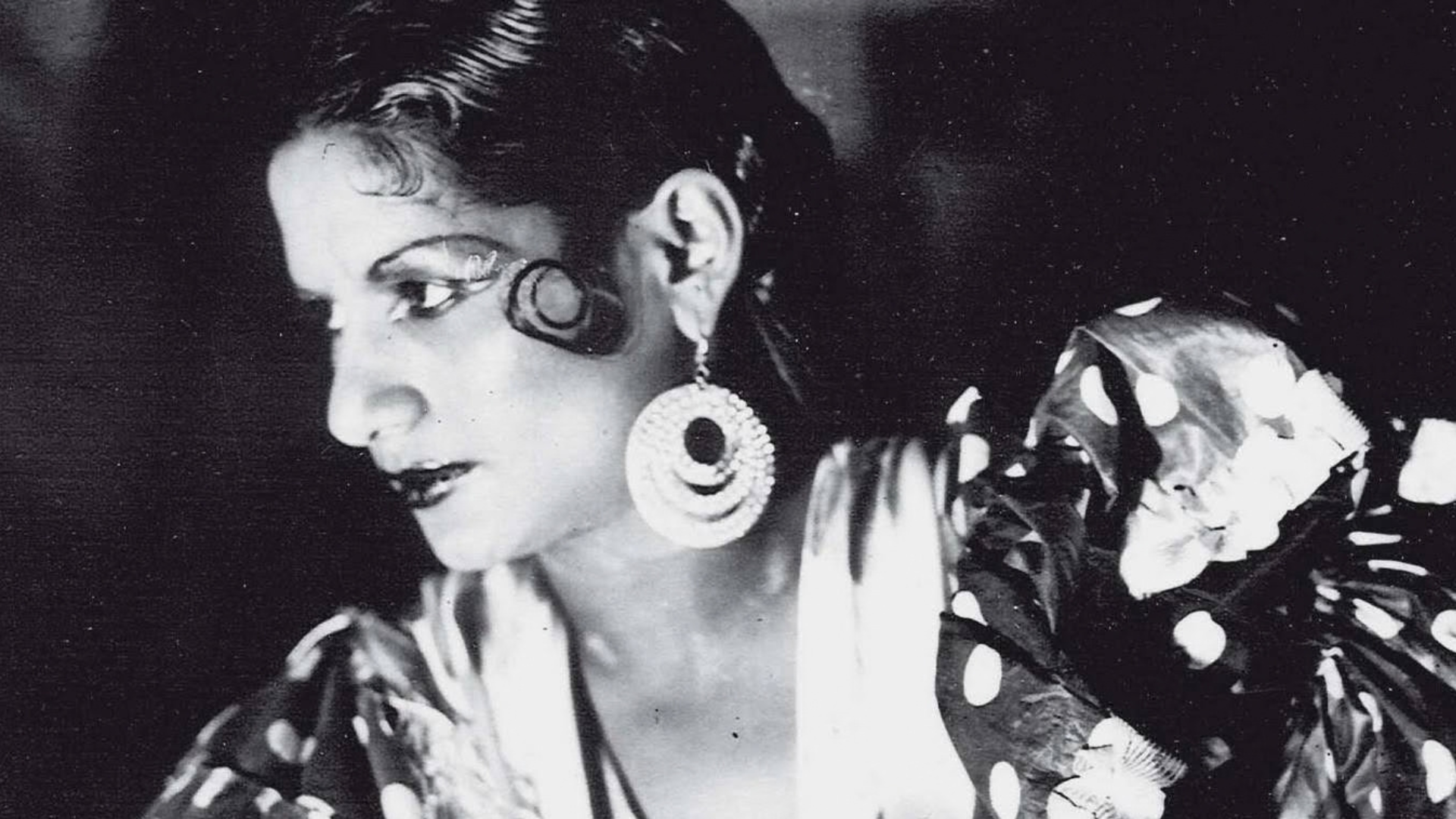
Imagine a dancer whose feet move so fast they seem to blur, whose heels strike the floor like a percussion instrument, and who walks into a world that expects women to dance one way, only to rewrite the rules entirely. That dancer was Carmen Amaya, one of the most electrifying figures in flamenco history. But was she the greatest flamenco dancer of all time? Ask ten flamenco aficionados, and you may get ten different answers. Some will champion Antonio Gades, whose theatrical vision transformed flamenco for the stage and screen. Others may point to Vicente Escudero, a modernist who pushed the boundaries of the form, or La Argentina, who helped bring Spanish dance to international audiences. Flamenco has no official scoreboard, no championship belt, and certainly no universally accepted ranking. Greatness can mean technical brilliance, artistic innovation, rhythmic mastery, or the rare ability to make an audience feel something beyond words. Yet if greatness means extraordinary technique, an unmistakable artistic identity, international impact, and the power to change what audiences believe is possible, Carmen Amaya belongs at the very center of the conversation. Her story is not simply about becoming a star. It is about a Romani woman from Barcelona who emerged from poverty, challenged gender conventions, crossed borders, and helped change flamenco forever.
From Barcelona's waterfront to the world's biggest stages
Carmen Amaya was born into a Romani family in Somorrostro, a poor settlement of makeshift homes along Barcelona's waterfront. Her father, José Amaya, known as El Chino, was a guitarist who earned a living playing in taverns. Her mother, Micaela, also came from a flamenco family. From an early age, Carmen accompanied her father, dancing while he played. Her education did not come from a prestigious dance academy. She learned through family, listening, and through a living cultural tradition. She also learned from the demanding experience of performing before audiences who could decide in an instant whether to reward her with coins. Her early career unfolded in Barcelona's taverns, cafés, and theaters. By the late 1920s, her extraordinary talent was attracting attention. At a mere 14 years old, she was already making headlines. The critic Sebastián Gasch first encountered a young Amaya performing at La Taurina in Barcelona’s Barrio Chino. In 1931, he published a landmark piece in the Catalan weekly magazine Mirador that captured her raw, untamed style: [1, 2, 3]
"Imagine a little Romani girl of about 14 years old sitting in a chair on the 'tablao' [flamenco stage]. Carmencita remains impassive and statuesque, haughty and noble, with indescribable racial nobility, hermetic, absent, inattentive to everything happening around her, alone with her inspiration, in a tremendously hieratic attitude, to allow the soul to rise towards inaccessible regions. Suddenly, a leap. And the little Romani dances. The indescribable. Soul. Pure Soul. Feeling made flesh." [1]
The woman who changed flamenco dancing
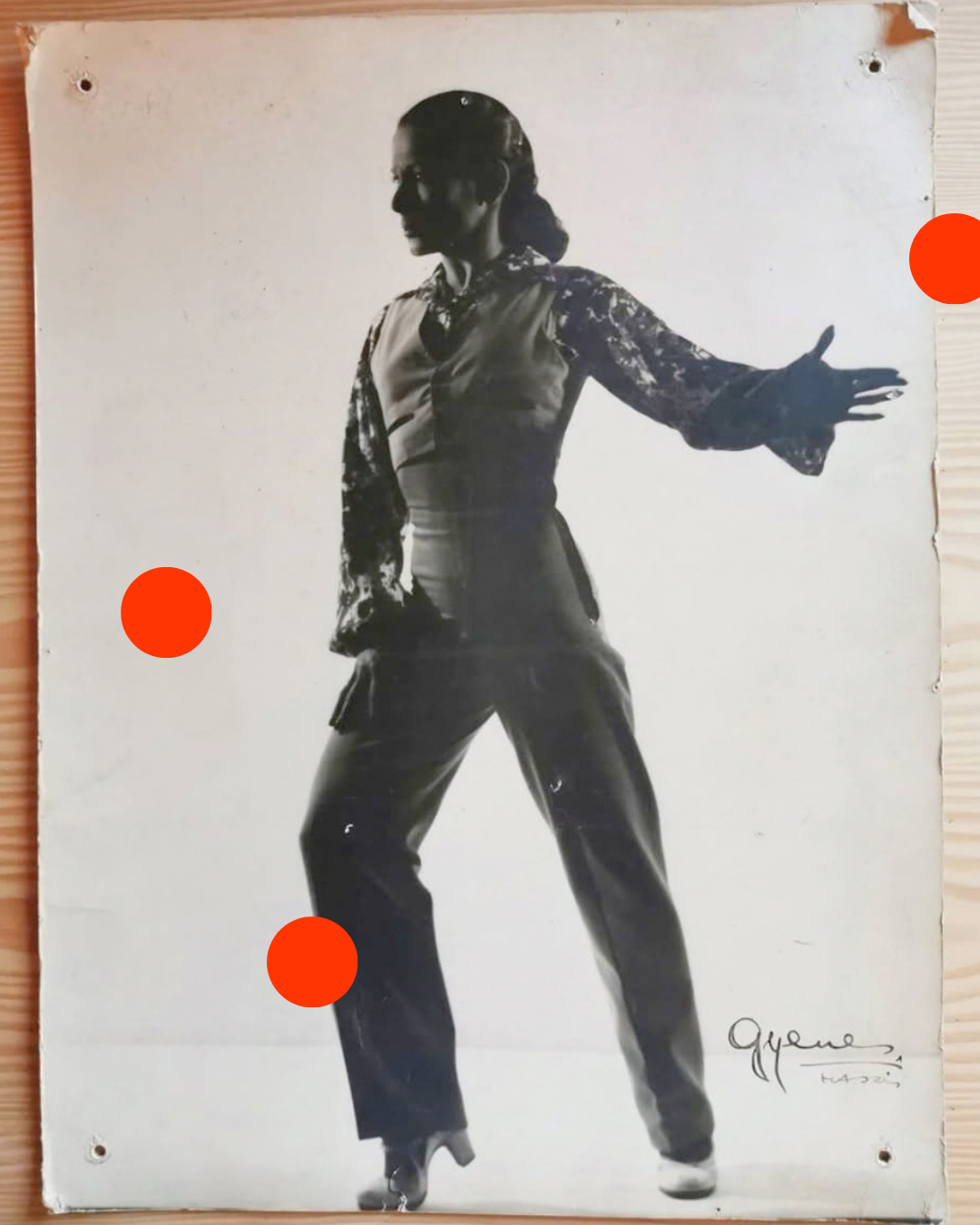
To understand Amaya's impact, it helps to understand the conventions she confronted. Historically, stage flamenco often emphasized a contrast between masculine and feminine dancing. Men were associated with powerful, intricate zapateado, or percussive footwork, while women were frequently encouraged to emphasize arm movements, torso articulation, and the sweeping elegance of long skirts, including the spectacular bata de cola. These were conventions, not absolute rules. Women had always been formidable dancers. But Amaya challenged the expectation that a female dancer should restrain her footwork to preserve a particular image of femininity. She attacked the floor with astonishing speed, precision, and rhythmic complexity. Her upper body could appear almost still while her feet unleashed a torrent of sound. And then there were the trousers. Amaya frequently performed in trousers and a short jacket, a look that became inseparable from her artistic identity. The clothing suited her athletic, footwork-driven style while challenging the visual conventions through which audiences had learned to recognize a female flamenco dancer. She did not simply imitate male dancers. She combined powerful footwork with the expressive arms, torso, and dramatic presence of the bailaora. The result was her own unmistakable style. Her achievement was not to abandon flamenco's traditions, but to demonstrate how much more was possible within them.
Exile, Hollywood, and international fame
In 1936, as the Spanish Civil War erupted, Amaya and her artistic circle were outside Spain and went on to build an international career. Her travels took her across the Americas, where she became a sensation, particularly in Argentina and the United States. Her success abroad was central to her legacy. She became one of the artists through whom international audiences encountered flamenco as a powerful performance art rather than merely a picturesque attraction. Amaya appeared in films including La hija de Juan Simón (1935), María de la O (1936), and Los Tarantos (1963). The last, directed by Francisco Rovira-Beleta, reimagined the Romeo and Juliet story within Barcelona's Romani community and became one of her most enduring cinematic legacies. She also performed for President Franklin D. Roosevelt at the White House in 1944, according to biographical accounts. Her international career brought her before audiences accustomed to opera, ballet, Hollywood entertainment, and other established forms of stage performance. What made her remarkable was that she did not need to make flamenco look like any of those things. She brought the force of her own tradition into prestigious venues and made audiences pay attention on its own terms. Her fame did not erase the prejudice and economic hardship experienced by Romani communities. But her career created an extraordinary public presence for a Romani woman at a time when social and artistic opportunities were deeply unequal.
The woman behind the legend
Onstage, Carmen Amaya was a force of nature. Offstage, those who knew her remembered a woman whose warmth and generosity stood in striking contrast to her fierce artistic intensity. Fellow performers described her as affectionate, modest, and refreshingly unpretentious. One musician recalled that once a rehearsal or performance ended, Amaya became a caring, openhearted presence, ready to give someone whatever she had. Her fame never seemed to put distance between her and the people around her.
Family was at the heart of Amaya’s life and career. Her father, a flamenco guitarist, introduced her to performing when she was still a child, and her sisters and other relatives later traveled and worked with her. Wherever her career took her, she brought her artistic family along. Flamenco is built on this kind of connection: the dancer listens and responds to the singer, the guitarist follows the shifting energy, and the performance comes alive through a shared understanding that no single artist can create alone. Amaya’s extraordinary individuality grew from that collective world. She married guitarist Juan Antonio Agüero and continued performing internationally before returning to Catalonia.
In 1963, serious kidney disease brought her remarkable journey to an end. She died in Begur, Catalonia, on November 19, just days after receiving the Encomienda de Isabel la Católica in recognition of her artistic contributions. Her final film, Los Tarantos, appeared that same year, leaving audiences with a lasting record of her presence and power. What remains is the force of her legacy. Through film, photographs, and the memories of those who shared the stage with her, we glimpse not only the dancer who transformed flamenco, but also the generous, unvarnished person behind the legend.
So, was Carmen Amaya the greatest flamenco dancer of all time?
There is no objective way to settle that question. Flamenco is too diverse, too historically layered, and too dependent on individual artistic values to produce a definitive winner. A dancer who prizes the intricacies of compás might make a different choice from someone who values choreographic innovation. A devotee of traditional baile might favor a different artist from someone drawn to theatrical experimentation. But Carmen Amaya's case is unusually compelling. She possessed extraordinary rhythmic and physical ability. She developed a distinctive artistic identity, challenged gender conventions, and brought flamenco to international audiences without abandoning the cultural traditions that shaped her. She left an enduring record in film and photography and expanded what future generations could imagine a female flamenco dancer doing.
Perhaps Carmen Amaya’s greatest achievement was not simply that she danced faster, harder, or with more force than anyone had seen before. It was that she expanded the possibilities of flamenco while refusing to diminish any part of herself. A Roma woman at a time when prejudice and discrimination limited the opportunities available to her community, she claimed the world’s stages on her own terms. She carried the traditions she had inherited from her family and Roma community into international concert halls and onto film screens, bringing their artistry to audiences around the globe. She did not soften her identity to make herself more acceptable, nor did she conform to expectations of how a woman should move, look, or command a stage. She was unapologetically herself: fierce and uncompromising. In doing so, she became a trailblazer not only for flamenco, but for generations of artists who would follow, showing that cultural roots were not something to hide in pursuit of greatness. They were a source of power.
Works Cited/Further Reading
- RomArchive: Carmen Amaya — Biography exploring her Romani identity, childhood in Somorrostro, early performances, international career, and artistic legacy.
- Historias de Flamenco: Carmen Amaya (1918–1963) — English-language biography by flamenco historian Montse Madridejos, useful for understanding her life and the disputed birth year.
- Universitat de Barcelona: El flamenco en la Barcelona de la Exposición Internacional (1929–1930)** — Academic research on Barcelona's flamenco scene, Amaya's early career, and uncertainties in historical accounts of her childhood.
- CanalSur: Semblanza de Carmen Amaya — Spanish-language archival biography covering her early performances, international success, films, and death.
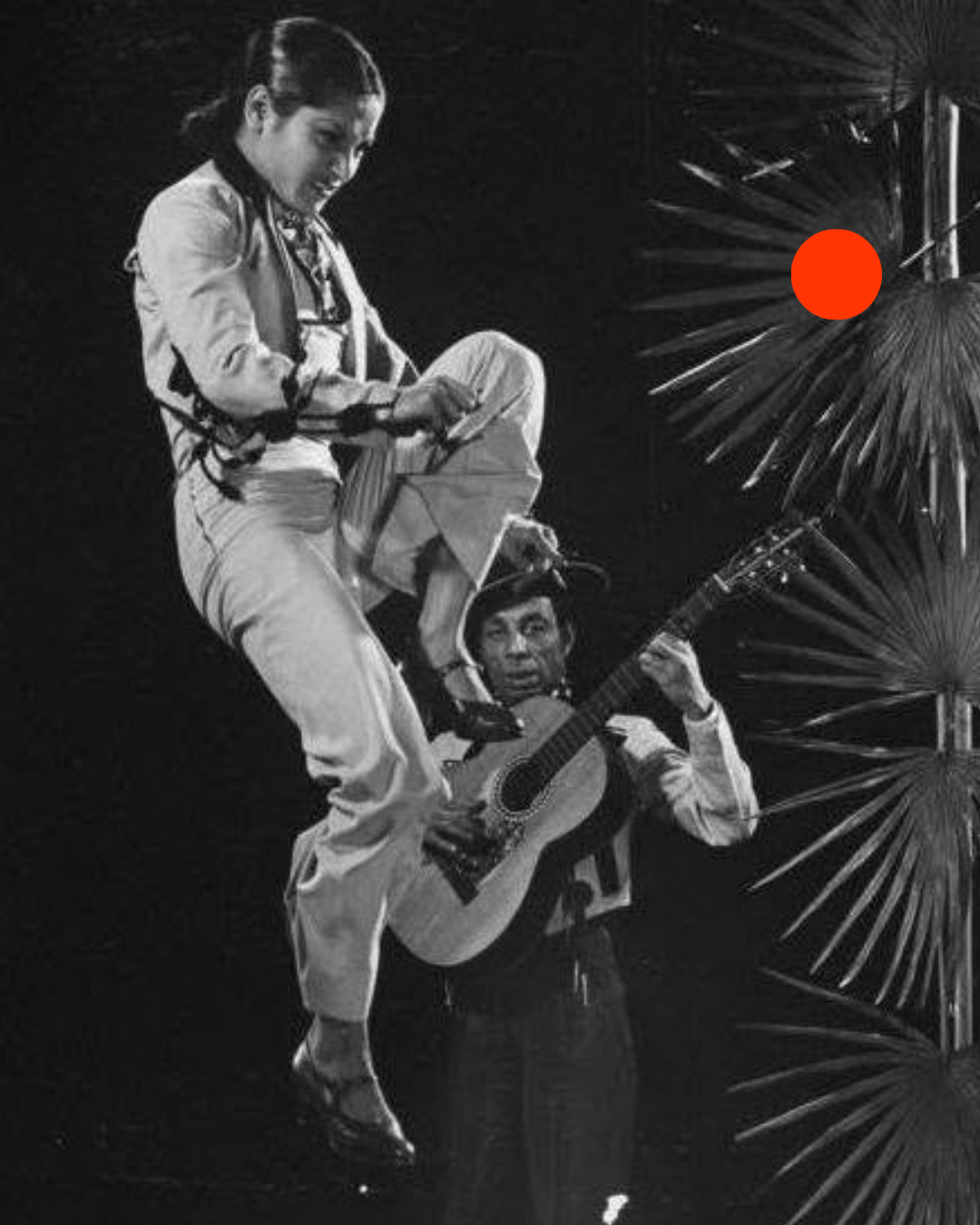
- Google Arts & Culture: Carmen Amaya, photographed by Gjon Mili (1940) — Archival photograph from the LIFE Photo Collection, relevant to the article's discussion of Amaya's extraordinary movement. Check image licensing before publication.
- RTVE: Carmen Amaya, la revolución del baile flamenco — Spanish radio documentary featuring historical recordings and testimony about Amaya's life and influence.
- Ajuntament de Barcelona: Carmen Amaya biography and archival photographs — Municipal archival resource with historical photographs and biographical context.
- Escuela de Flamenco: Carmen Amaya — Spanish-language biographical resource covering her family, early performances, and career.
- ****Historical note: Amaya's birth date and some details of her early life vary across sources. The article distinguishes the established outline of her career from details that remain uncertain.****
- DeFlamenco: “Centennial Special: Carmen Amaya” — includes a first-person recollection from a fellow performer describing Amaya as affectionate, humble, caring, and so generous she would give others whatever she had.
- Spanish National Archives (PARES): Carmen Amaya — an official archival entry identifying her as born in 1918 and documenting her family, career, final film, and death.
- Málaga Hoy: Research on Carmen Amaya’s birth year — discusses the uncertainty surrounding her birth date and the 1917 hypothesis associated with flamenco researcher Montse Madridejos.







SUPPORT
Ignite the transformative power of flamenco for all.
Your tax deductible donation goes directly to artists and programs. We can't do it alone. Your support makes all the difference!

