What is Flamenco?
SALIDA
To start, (some ground rules) - I won’t pretend to have the word on what Flamenco is, but I will be Valiente (courageous) and share my experience, my feelings and emotions, and my current understanding and perspectives.
Flamenco is a lot of things. Layers of depth that never end. Like a living organism’s essence, the more you dive into it, the more elusive it becomes. Like the roots of a tree in the forest, if you try to find their ending, the more entanglement and directions you will find, paths that will take you into rabbit holes that connect to multiple other threads. Flamenco is a puzzle in multiple dimensions that gives life and is Life, and it is the heart, pure emotion. Flamenco gives it or takes it, transforms it, and burns it in its ever burning Fire.
Flamenco is Art and also a Culture, a History and a Huella (print). Above all, I dare say it is a language, an experience and an expression. An expression that was born through transformation and collage, love and respect, and shared experiences.
WATCH VIDEO HERE: Arqueología de lo Jondo, “Capítulo 1 | Las edades del flamenco” por Canal Sur Más
At the start of Arqueologia de lo Jondo, a book by Antonio Manuel that is also a feature documentary, journeying towards the origin of the jondo (deep, intense, authentic) through words, spirituality and music that goes beyond flamenco…
Antonio Manuel is the writer of the book, a raconteur, researcher and interpreter, and narrator of the documentary. Rocio Marquez, a cantaora, flamenco singer and artist.
… they start the first chapter in conversation with each other:
Rocio: “What is the origin of flamenco?”
Antonio: “Flamenco doesn’t have a single origin nor a single date in the calendar. It is the result of a very slow birthing process which has made it Eternal, and it is the child from a multitude of mother’s milks, which has made it Universal.”
.png)
Rocio: “Every time I have heard the different theories around it, gitano (Roma), musical, andalucian, instrumentalist, I’ve always felt they are all perfectly complimentary, and in fact they illustrate how immense Flamenco is, how wide of a net it has cast.”
Antonio: “Because Flamenco is one in its diversity! And this is why all of them are correct, but if you pay attention, they’re all crossed by marginalization, racial mixture, and memory, because Flamenco is the mix of the popular and cultured music of those who decided to keep the Memory alive so it wouldn’t be lost, and those were Jewish, Moorish, African, Gitano (Roma), jarocho, guajira…”
Rocio: And I would add to that, Freedom! Because you have said guajira, and all of a sudden it entered my mind, the letrilla that Pastora sang.
LETRA
🎶“Ay por un potrerillo entre, por un potrerillo e entrao,
ay por un potrerillo enre solo por ver a una indiana
la cual se llamaba Juana y el apellido no se”.
Guajiras (En un Potrerito Entré), Pastora Pavón AKA la Niña de los Peines with Currito de la Jeroma. Registros Sonoros, Vol. 8/13 (Popular)
...and Marchena, the same exact letra (lyric) has taken it to a different place,
... and each one gave it their own flavor…
“Each one to their own tune: freedom!, -so, then, the origin of Flamenco is Freedom!”
“En un portrerito entre”, Memorias Antológicas del Cante Flamenco, Vol. 3 por Pepe Marchena feat. Guitarra: Paquito Simón
.jpg)
I started learning flamenco dance when I was 47 years old.
I had been trying to find a dance that would inspire me, I was athletic, running 10-15 mile races, but I had come to the conclusion that the only and most important thing in life is music, and although it was not what I had studied, it was the only thing I really wanted to put my energy into, to learn and practice. I was single at that time, a single mother to be exact, and was going out to live music events in Oakland, a city in the SF Bay Area. One night I went to an event where a band (which doesn’t exist anymore) named Baja California was playing, they were a mix of rhythms with latin influence. That day, I had the first experience of a percussionist dancer, it was my now teacher and mentor Melissa Cruz.
Flamenco became the journey and the guide.
That moment was cathartic, I felt a call from the deepest depths. I didn't know that was Flamenco, because in my mind then, like in probably a lot of people’s minds now, flamenco was visualized in the form of ruffle dresses and flowers only. I did grow up listening to Lola Flores, who my mom idolized. I met Paloma that day, and she told me Melissa was a teacher, and I could take classes with her. I started taking classes and, 8 months later, I was run over by a car. This happened 8 years ago.
I had many injuries, physical, psychological, intellectual, and that is another story. What matters for this story is that I could feel in my skin the magic of Flamenco, the life energy it carries and transmits, and the power it has to transmute pain. Like an alchemist, the more you are able to connect with it, the more its energy takes over. It becomes an addiction, and for me, a religion. We are made of stars and scars, and sharing them with others is the point of life.
Flamenco is deeply connected to language and that language happens to be my maternal language, Spanish. There are other influences in Andalucía: Moorish, African, and Sephardic Jewish, as well as Latin American—Jarocho and Guajira. There is power and memory in the words, like there is in the movements.
Flamenco is an alchemist, a healer and a source of spirit. Like a martial art, it requires discipline, passion, silence and constant practice. It is a form of being in the world, and a way of seeing the world.
.png)
I won’t be a professional dancer but I will practice to live in the Compás (rhythm).
Flamenco is geometry: tension, lines, points. It’s an expression: intention, attitude, energy.
Because I’m an architect, I correlate and understand concepts visually, graphically. I can visualize patterns and shapes in my mind's eye, the dance movements are lines in space, the footsteps are drawings on the floor surface. The movements in Flamenco are aligned with the Palos (rhythms) and Letras (lyrics). There are fluid and sharp movements, there are smiles and frowns, passion, silences and shouts, feelings and emotions: Graves, Lentas, Allegros and Prestissimas. Flamenco is Music: Percussion, Melody, Tempo, Rhythm. For some, understanding the mathematical counts of the beats is important, for others, -like me- it is more important to hear the musicality of each layer in order to learn. Learning requires listening, a lot of listening, and participating. Flamenco is Presence.
Flamenco is Life.
As I said in the beginning, I can't claim to know or be able to explain what Flamenco is, but I want to transmit my feelings through these words, and, most of all, my hope is that you feel curious. Curious to learn more, know more, and experience more.
Flamenco is after all, Humanity. A part of Unesco’s Representative List of the Intangible Cultural Heritage of Humanity. I know that I will keep learning and practicing, singing and dancing, listening and partaking, until the day I leave this plane and pass onto another, and i pray with all my heart that if I must come back, I get to do it as a Flamenc@ singer, dancer or musician, starting on the day of my re-birth.
For now, Cheers! to Freedom!
Breathe - Inspiration and Aspiration
REMATE
((( ~ Flamenco is Duende ~ )))
.jpg)
.jpg)
.png)
Works Cited/Further Reading
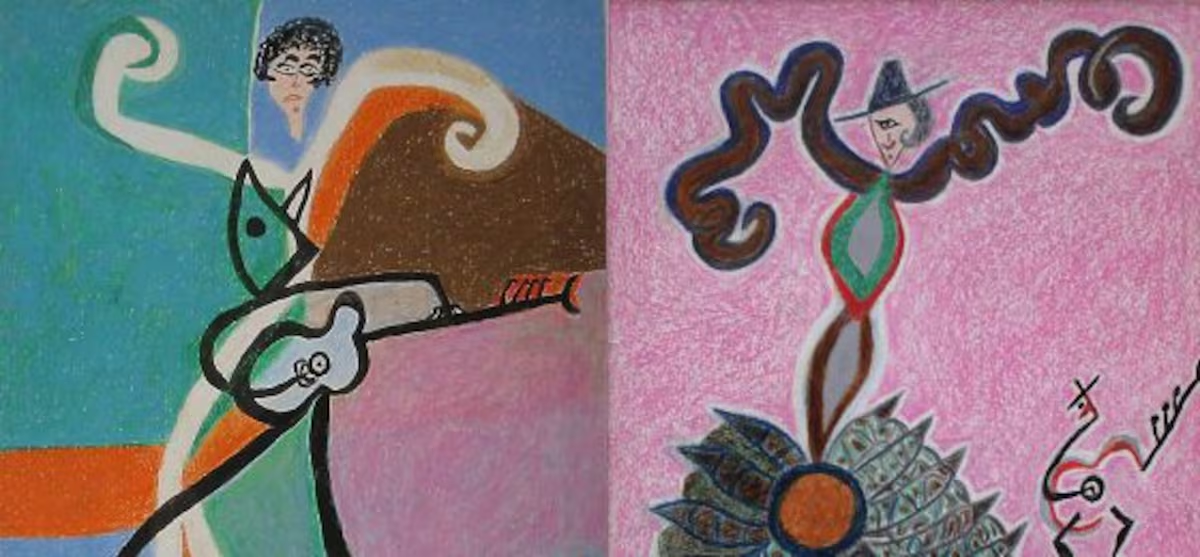
Cover image by flamenco icon Vicente Escudero (Valladolid 1888, Barcelona 1980)—a dancer, choreographer, writer, painter, actor, and singer… a complete artist.
Image Gallery 1: Rocío Marquez, photographer unknown
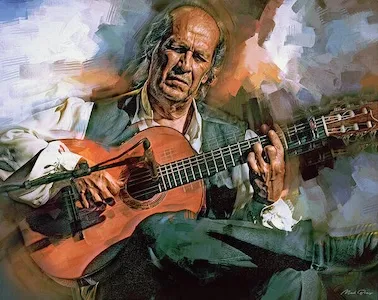
Image Gallery 2: Paco de Lucía by photographer Gianni Ferrari (1976)
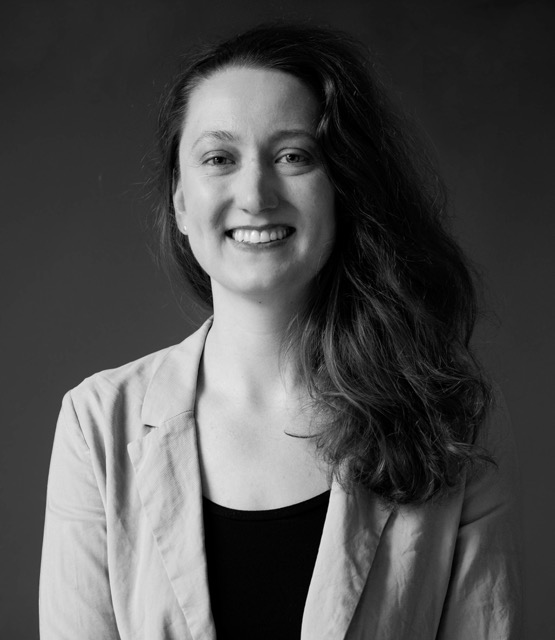
Image Gallery 3: Article's Author Diana Ariza
Antonio Manuel & Rocio Marquez, Arqueología de lo Jondo, “Capítulo 1 | Las edades del flamenco” por Canal Sur Más
VIDEO: Paco de Lucía - Entrevista de Jesús Quintero - Programa completo
.png)


.png)
.png)
SUPPORT
Ignite the transformative power of flamenco for all.
Your tax deductible donation goes directly to artists and programs. We can't do it alone. Your support makes all the difference!

